Contact Us Careers
Intestine Cancer

How important is it to prevent recurrence and metastasis after rectal cancer surgery?

时间:2026-04-16 人气:

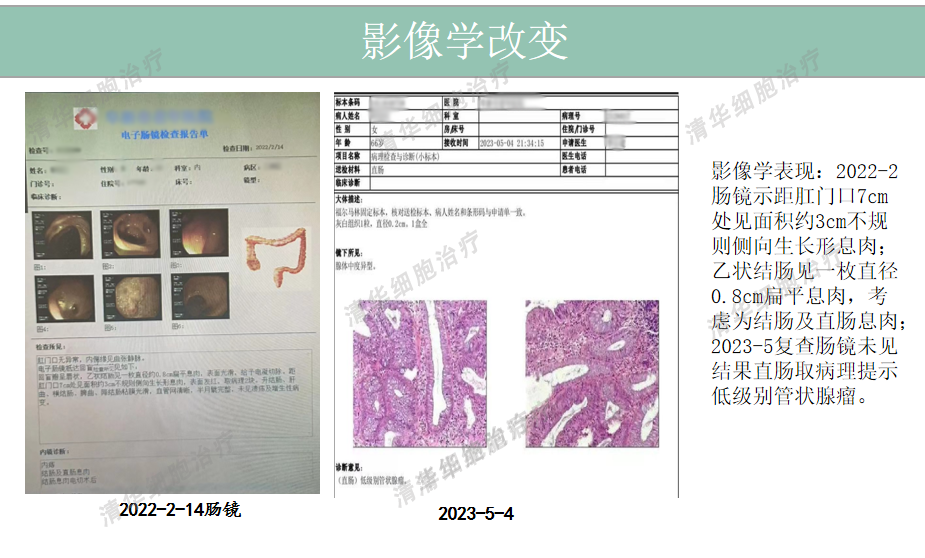
In February 2022, Ms. Shan experienced abdominal distension and discomfort. Upon undergoing a colonoscopy at the hospital, an irregular lateral growth-shaped polyp measuring approximately 3cm in area was found 7cm from the anal opening, and a flat polyp with a diameter of 0.8cm was found in the sigmoid colon. Electrosurgical excision was performed, and the pathology revealed: highly differentiated adenocarcinoma of the rectum, with some showing villous adenoma morphology.
Ms. Shan underwent laparoscopic anterior rectal resection on March 15th. Postoperative pathology: rectal protruding moderately differentiated adenocarcinoma with high-grade tumor budding and low-differentiated tumor cell clusters, visible vascular thrombi, no clear nerve invasion. Adjacent to the cancer, villous tubular adenoma was found, accompanied by low-grade and focal high-grade epithelial neoplasia. The cancer tissue invaded to the submucosal layer, without involvement of the muscularis propria. Lymph node involvement outside the capsule (intestinal wall lymph nodes 1/2; mesenteric lymph nodes 0/9). Immunohistochemical results showed: BRAF-V600E(-), C-MET(2+), HER2(1+), MLH1(+), MSH2(+), MSH6(+), PMS2(+), Desmin (indicating muscularis mucosae). Chemotherapy was administered for 4 cycles from April to June 2022.
Ms. Shan had previously undergone surgery for breast cancer in 2010, Ms. Shan is a patient with dual primary cancers of breast and rectum, for more information on "multiple primary malignancies", please click on this article to view Dual Primary Lung and Breast Cancer: Choosing the Right Approach to Regain Hope for Survival .
Precancerous lesions - adenoma  
 

Colorectal cancer (CRC) has an annual incidence rate of 1.3 million new cases globally, making it the third most common malignant tumor worldwide. In most regions, the incidence rate in males is significantly higher than that in females, and it is also the second leading cause of cancer-related deaths globally. The incidence rate of CRC in China currently ranks third. In 2011, the incidence rate of CRC in China was 23.03 per 100,000 people. Many studies have confirmed that the incidence of CRC is shifting towards younger age groups, with the number of cases among young people gradually increasing over the past decade.

Among the various mechanisms underlying the development of CRC, colorectal adenoma (CRA) is a significant factor. According to the adenoma-carcinoma sequence hypothesis, which describes the development pattern of normal mucosa-adenoma-carcinoma, 85% of intestinal cancers develop from adenomatous polyps.

CRA can progress from low-grade dysplasia to tumor cells. Depending on different histopathological classifications, polyps can be divided into adenomatous and non-adenomatous types. Adenomatous polyps can further be classified into tubular adenomas with less than 20% villous component, tubular-villous adenomas (also known as mixed adenomas) with 20% to 80% villous component, villous adenomas with more than 80% villous component, and less common serrated adenomas.

In advanced adenomas, a higher villous component is a high-risk factor for the development of CRC. Tubular-villous adenomas have the potential to develop into invasive cancers. Therefore, early screening, diagnosis, and intervention of precancerous lesions are particularly important. Endoscopic resection of adenomas can effectively prevent CRA from progressing to CRC and improve public health.
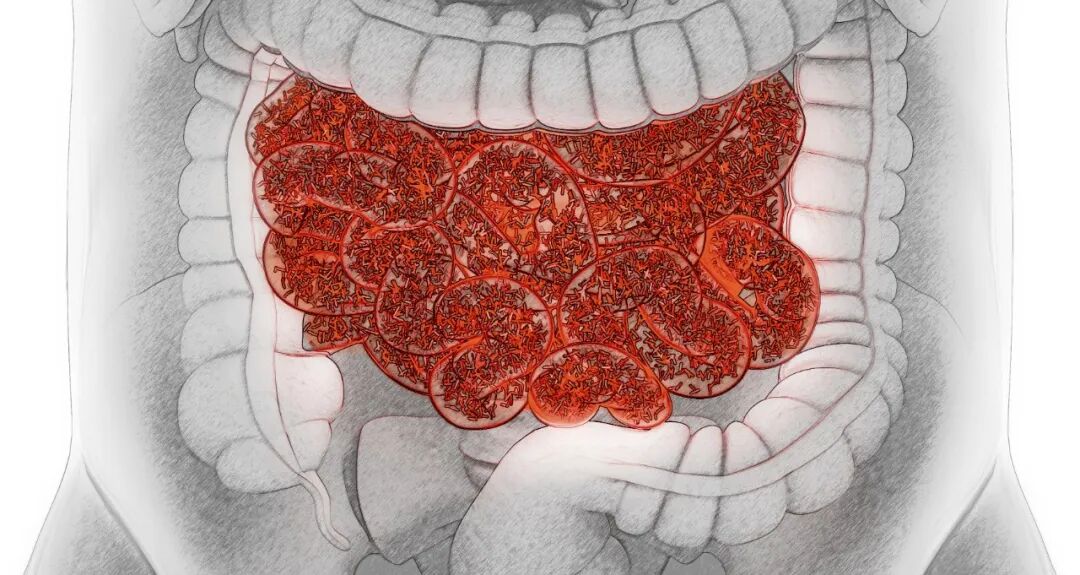


Ms. Shan underwent surgery to remove the primary lesion and received four courses of chemotherapy. To prevent tumor recurrence, after extensive research, Ms. Shan and her family learned about Professor Zhang Minghui's vNKT technology from Tsinghua University School of Medicine through a friend's recommendation, and carefully reviewed the case studies of vNKTcell therapy. She particularly hoped to try it to reduce the risk of tumor recurrence and delay the time of recurrence and metastasis.

After reviewing Ms. Shan's medical records, Professor Zhang Minghui made the following analysis and judgment:

1. The patient underwent radical surgery for rectal cancer, and postoperative pathology showed vascular tumor thrombus and lymph node metastasis. Although chemotherapy was administered, radiotherapy was not performed, posing a risk of metastatic recurrence.  

2. The patient, being elderly, has undergone surgery and chemotherapy, which have caused significant damage to their immune system. Restoring immunity as soon as possible is of utmost importance.

3. The patient has dual primary cancers of breast cancer and rectal cancer, and a cancerous constitution requires heightened vigilance.

4. vNKT therapy utilizes powerful immune cells to eliminate tumor cells that may remain undetected in the body, with essentially no side effects, and can reduce the risk of tumor recurrence.
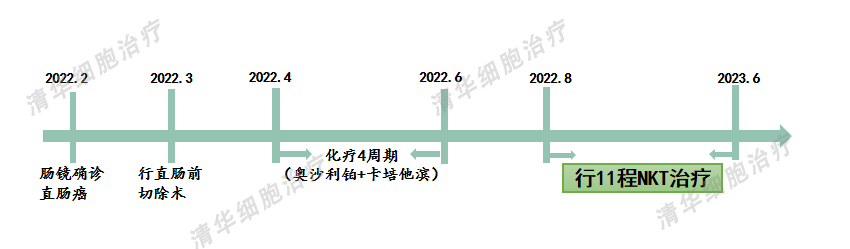

 

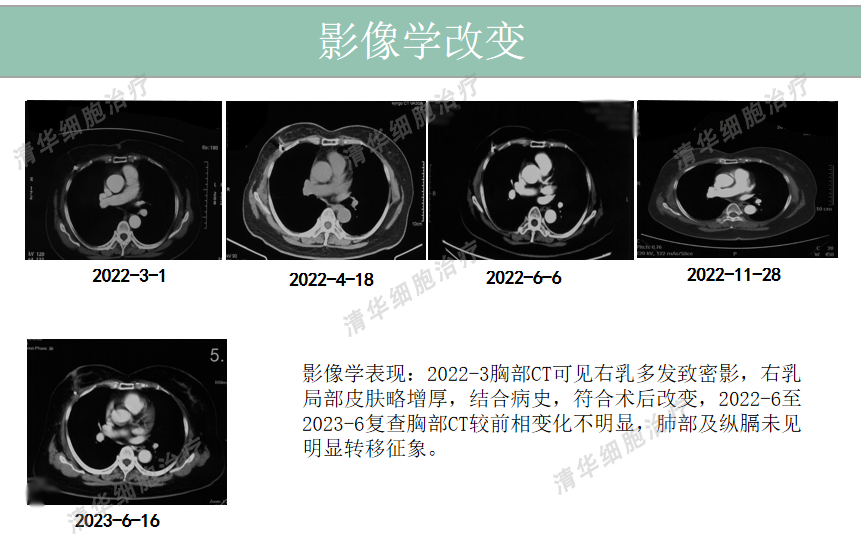
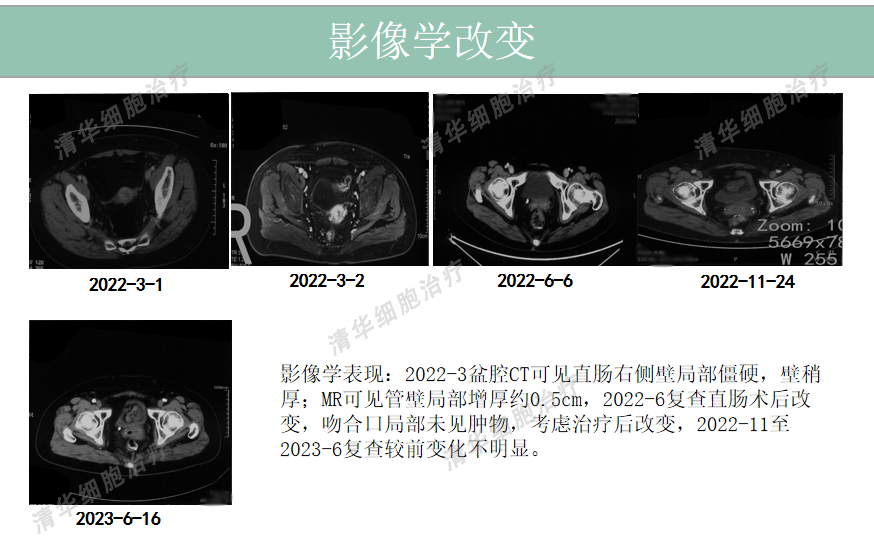
Ms. Shan began vNKT cell immunotherapy in August 2022 and had completed 11 courses by June 7, 2023. Follow-up evaluations showed no signs of recurrence or metastasis.

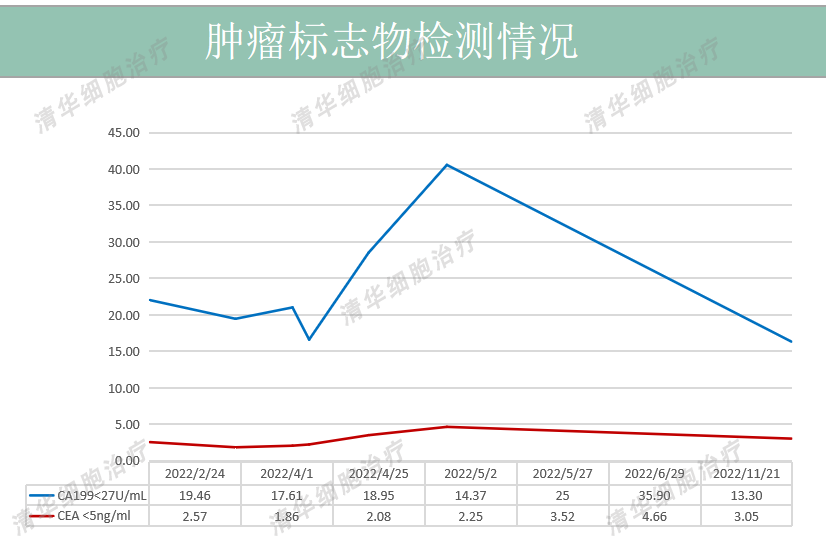
CEA: within the normal range from February 2022 to November 2022;
CA199: within the normal range from February 2022 to May 2022, increased in June 2022, and decreased to within the normal range during a follow-up examination in November 2022.

Ms. Shan achieved the expected results after undergoing vNKT cell therapy, feeling more energetic and experiencing fewer colds and fever episodes during spring and winter. Her quality of life score improved significantly to 90.5 (previously 88).
Colorectal cancer is a digestive tract disease that seriously affects human health. Surgery is the only means of radical treatment for colorectal cancer, but there is a problem of postoperative recurrence and metastasis. For most advanced rectal cancer patients, despite postoperative combined chemoradiotherapy, the recurrence rate remains as high as 40%. The postoperative survival time and prognosis of patients are influenced by recurrence-free survival (RFS). Once metastatic lesions are detected, the 5-year survival rate drops to less than 5%, and the average survival period is significantly shortened to only 7 months[1-3] . Therefore, preventing recurrence and metastasis after radical resection of colorectal cancer is crucial.
Studies have shown that tumor length >5cm, lymph node metastasis, vascular thrombi, and no adjuvant therapy after surgery are all independent risk factors affecting early recurrence and metastasis. If patients fail to undergo adjuvant therapy promptly after surgery due to various reasons, this increases the probability of cancer recurrence and metastasis[4]
Despite completing surgery and chemotherapy, Ms. Shan still faces the risk of recurrence and metastasis due to vascular thrombi and lymph node metastasis. Cancer cells can metastasize to various parts of the body through the bloodstream, forming small lesions that can persist within the body. The extent of primary tumor resection does not affect the continuous growth of metastatic lesions. vNKT therapy utilizes powerful immune cells to eliminate tumor cells that may remain undetected in the body, strengthening the patient's immune system and serving as a powerful barrier to consolidate the achievements of surgery and chemotherapy.

References:

[1] VAN DER STOK E P, SPAANDER M C W, GRÜNHAGEN D J, et al. Surveillance after curative treatment for colorectal cancer [J].  Nat Rev Clin Oncol, 2017, 14(5): 297-315.
[2] Chen Ningbo, Zeng Jie. Clinical study on postoperative recurrence patterns of colorectal cancer and prognostic analysis of reoperation [J]. Chinese Journal of Clinicians (Electronic Edition), 2016, 10(2): 198-202.
[3] NOZAWA H, SONODA H, ISHII H, et al. Postoperative  chemotherapy is associated with prognosis of stage Ⅳ colorectal cancer treated with preoperative chemotherapy/chemoradiotherapy and  curative resection [J]. Int J Colorectal Dis, 2020, 35(1): 177-180.
[4] Zhu Xueke The relationship between postoperative recurrence and metastasis of rectal cancer patients and their clinical pathological characteristics [J]. Journal of Practical Medical Technology, 2022, 29(08):810-813. DOI: 10.19522/j.cnki.1671-5098.2022.08.006.

Click on the image

to view