Contact Us Careers
Intestine Cancer

For rectal cancer, with two surgeries and 25 rounds of chemotherapy, the key is to prevent cancer cells from coming back

时间:2026-04-22 人气:

If you find it difficult to understand the subsequent professional descriptions, you can just take two minutes to read through this text.

Overview of the disease


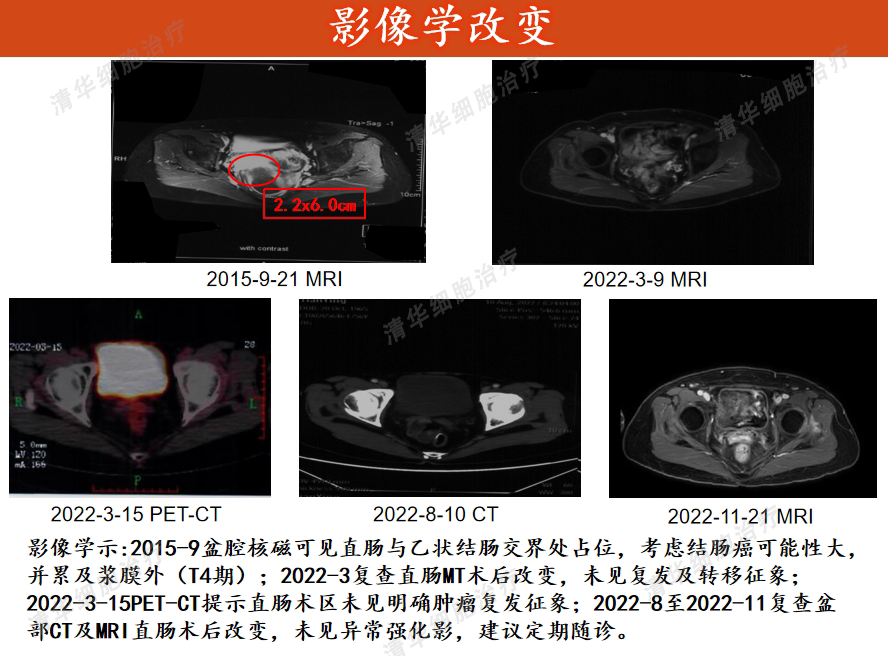
Ms. Tian underwent colonoscopy on September 19, 2015, due to recurrent hematochezia for one year and increased frequency of bowel movements for half a year. The biopsy specimen obtained from the colonoscopy showed rectal adenocarcinoma located 10cm from the anal opening.
After discovering the tumor, Ms. Tian underwent radiotherapy and three rounds of chemotherapy (with the regimen of oxaliplatin, calcium folinate, and 5-fluorouracil) from September 30, 2015, to November 25, 2015. After chemotherapy, she underwent laparoscopic-assisted anterior rectal resection. The postoperative pathology on December 30, 2015, showed that all specimens from the original lesion contained residual cancer tissue, with the deepest part located in the adipose tissue outside the muscular layer. The lymph node metastasis status was as follows: 3/10 paracolonic; no other lymph node metastasis was found. From January 20 to May 20, 2016, she underwent eight rounds of chemotherapy with the regimen of oxaliplatin, calcium folinate, and 5-fluorouracil. On June 30, 2016, she underwent capecitabine chemotherapy. From September 30 to November 25, 2016, she underwent three rounds of chemotherapy. On October 28, 2016, she underwent colonoscopy for electrosurgical excision and forceps removal of a polyp in the colon segment.
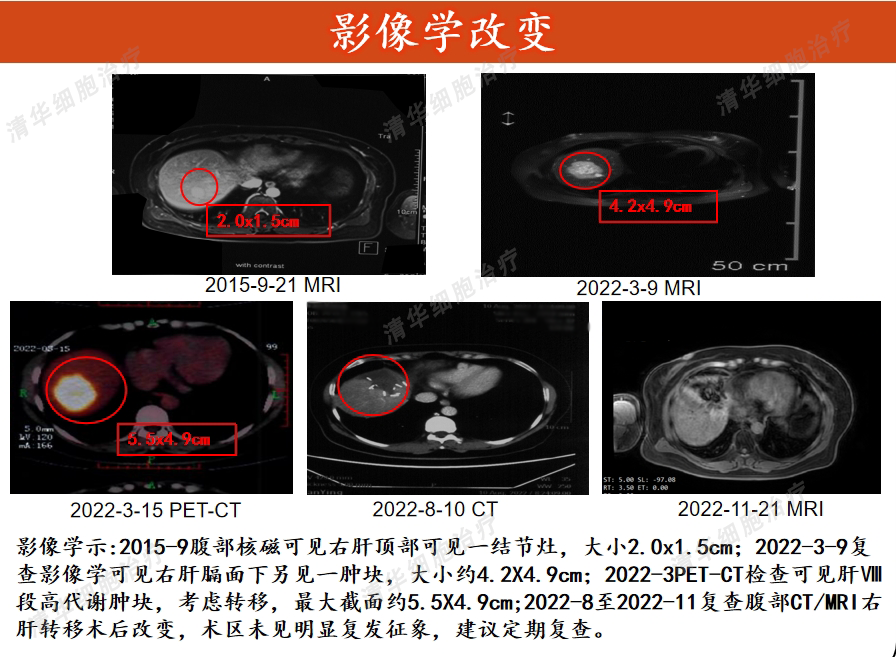
After multiple rounds of chemotherapy before and after surgery, Ms. Tian remained stable until March 2022, when a CT scan revealed a mass beneath the diaphragmatic surface of the right liver, with the largest cross-sectional area measuring approximately 5.5cm x 4.4cm. It was considered a metastatic tumor, and later confirmed by PET-CT as a liver metastasis. Ms. Tian underwent surgery again, and to reduce trauma, this time a robot-assisted laparoscopic liver resection (segment VIII) was performed. The postoperative pathology showed adenocarcinoma infiltration in the liver tissue (segment VIII tumor), which, combined with her medical history, hematoxylin and eosin (HE) morphology, and immunophenotype, was consistent with intestinal cancer metastasis.
From April 12th to May 9th, 2022, three rounds of chemotherapy were administered, all using the regimen of irinotecan, calcium folinate, and 5-fluorouracil. From May 19th to June 8th, 2022, fifteen rounds of radiotherapy were performed on the liver. From June to August 2022, five rounds of chemotherapy were administered, all using the same regimen of irinotecan, calcium folinate, and 5-fluorouracil.
Department
Pu
small
   
Knowledge

Recognition

Robot-Assisted Surgery

The robotic surgical system is a comprehensive system integrating multiple modern high-tech means. It has a wide range of applications and is widely used in clinical surgery. Because it performs surgery through endoscopes, it offers many advantages for elderly and frail patients. Minimally invasive endoscopic surgery requires only a few small incisions between the ribs to complete the surgical procedure, resulting in minimal patient pain and rapid postoperative recovery. The foundation of minimally invasive surgery is higher-precision imaging. The robot's high-definition three-dimensional imaging system can magnify the images within the surgical incision by 10-15 times, allowing surgeons to better grasp the operating distance and identify tissue structures more clearly compared to the 2D imaging of ordinary endoscopes. Coupled with the high flexibility of the robotic arm, the precision of the surgery is greatly enhanced. It is this robotic surgical technology that minimized the surgical risk for Ms. Tian.
 

After reviewing Ms. Tian's medical records, Professor Zhang Minghui made the following analysis and judgment:

1. The patient was found to have rectal tumors and underwent multiple chemotherapy treatments before and after surgery.

2. The patient's tumor penetrated the muscular layer and infiltrated into the adipose tissue, with local lymph node metastasis, which are all risk factors for future metastasis.

3. After discovering liver metastasis, the patient underwent surgical resection of the metastatic lesions, but there is still a risk of tumor recurrence.

4. NKT therapy utilizes powerful immune cells to kill tumor cells that may remain undetected in the body, with essentially no side effects. Combining NKT cell therapy after surgical treatment can effectively reduce the incidence of tumor recurrence after surgery.
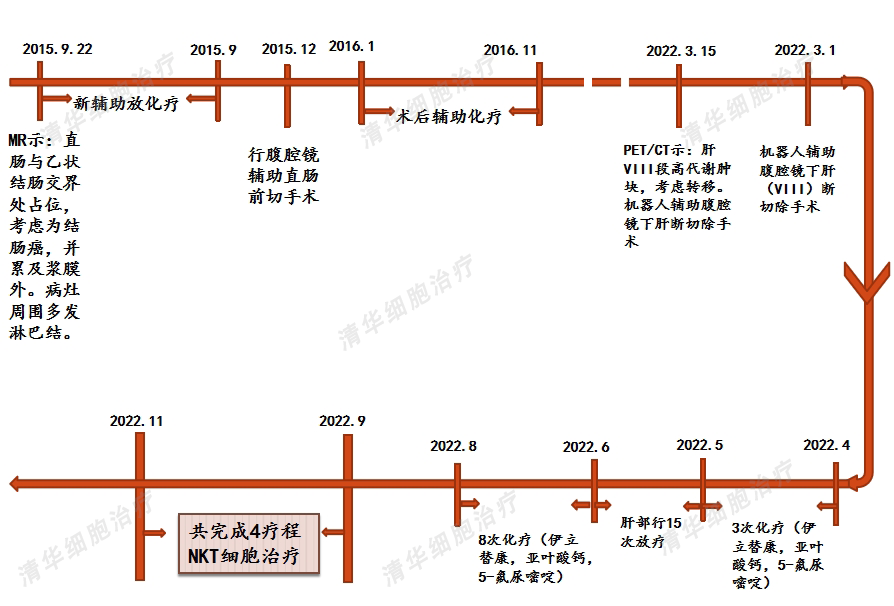
Ms. Tian began NKT cell therapy in September 2022 and completed the first phase (4 courses) of treatment in November 2022. During this follow-up examination, no clear signs of tumor recurrence were observed, and the overall condition remained stable.


Imaging


Tumor markers

 
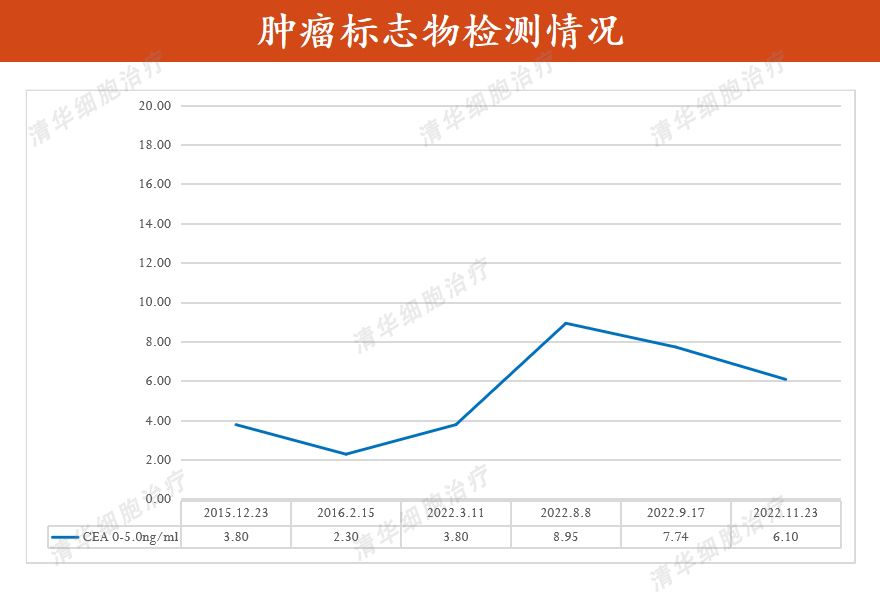
CEA: The recheck results from December 2015 to March 2022 were all within the normal range. However, the recheck results in August 2022 and September 2022 exceeded the normal range. In November 2022, the value was still higher than normal but had decreased. Regular rechecks are recommended, and close monitoring of changes is necessary.

 Conclusion and Comments


In the first stage, Ms. Tian's follow-up examination showed no clear signs of tumor progression, and her overall condition remained stable. In December 2022, her quality of life score was 81 (compared to 70 in the previous assessment). We hope that subsequent treatments and follow-ups will bring more good news.
Research indicates that robot-assisted surgery has advantages over standard laparoscopic methods in patients undergoing radical surgery for rectal cancer. Compared to laparoscopic techniques, the advantages of robotic surgery mainly lie in reducing operation time, significantly decreasing the conversion rate from laparoscopic to open surgery, shortening hospital stay, lowering the risk of urinary retention, and improving survival rate after discharge. With the increase in surgical cases and the widespread use of robots, more surgical opportunities will be provided for frail patients.
Ms. Tian has undergone two surgeries and dozens of chemotherapy sessions, and her body is very weak. Even with robotic technology, it would be difficult for her to withstand a third surgery. NKT cell therapy not only eliminates residual tumor cells but also strengthens the immune system. Most importantly, it has almost no side effects, and we hope it can bring long-term stability to patients.
Popular science knowledge is provided for reference only, and individual patients should follow clinical medical advice.   

References:

[1] Liu G, Zhang S, Zhang Y, Fu X, Liu X. Robotic Surgery in Rectal Cancer: Potential, Challenges, and Opportunities. Curr Treat Options Oncol. 2022 Jul; 23(7):961-979. doi: 10.1007/s11864-022-00984-y. Epub 2022 Apr 18.
Classic NKT Case Review

Click on the image

to view