Contact Us Careers
Lung Cancer

For advanced lung cancer that has metastasized upon diagnosis, targeted drugs combined with cellular immunotherapy are awesome!

时间:2026-04-16 人气:

This is Ms. Zhang's third condition evaluation. Previous content click the link below to view.

First evaluation: August 5, 2022

Second evaluation: February 24, 2023


Third evaluation

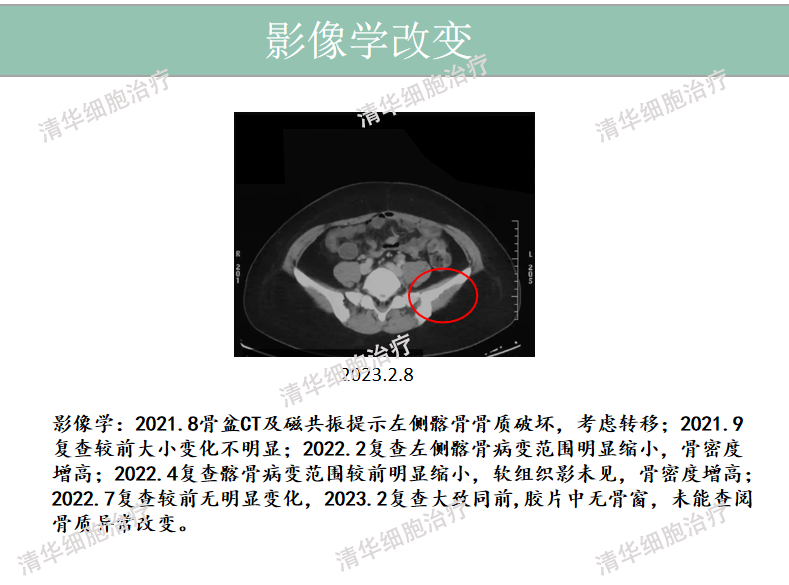
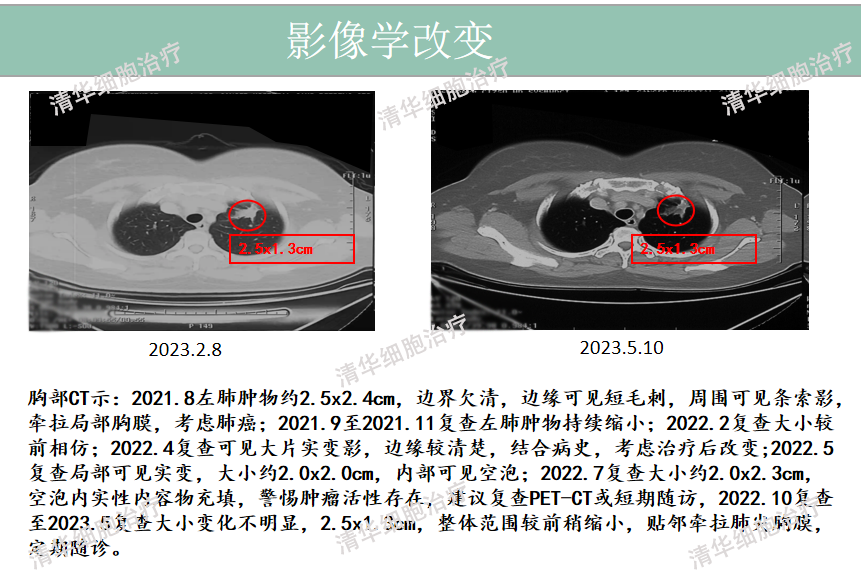
On August 5, 2021, Ms. Zhang underwent CT contrast-enhanced scan: an irregular mass was visible in the left upper lobe of the lung, with a maximum cross-sectional area of approximately 2.5cm×2.4cm, suggesting a high possibility of left upper lobe cancer; bone destruction was observed in the left ilium, indicating metastasis.
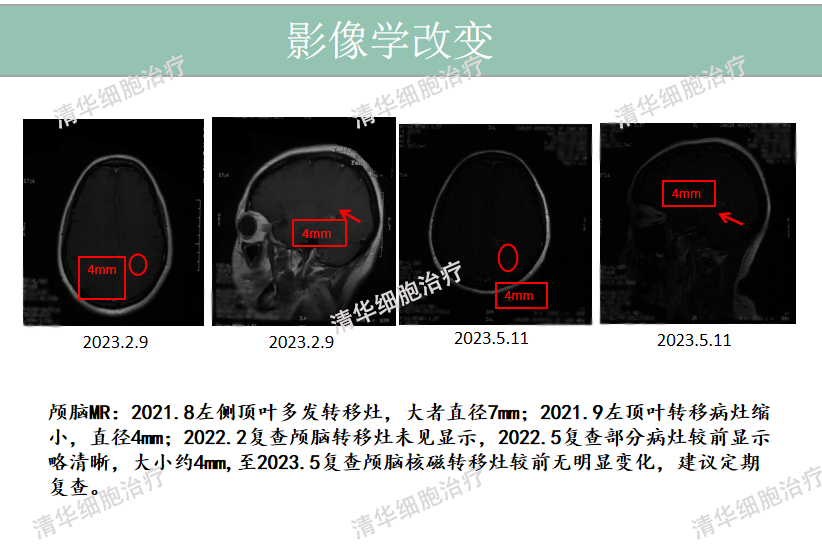
Pathological biopsy confirmed: moderately-to-poorly differentiated adenocarcinoma in the left upper lobe of the lung; gene testing results: EGFR gene exon 19 mutation was detected.Subsequent MRI scan revealed bone destruction in the sacrum and left ilium, as well as multiple nodules in both hemispheres of the brain, considered as metastatic lesions. Due to the presence of multiple metastatic lesions, surgical treatment was not performed, and Ms. Zhang began to receive oral targeted therapy with Osimertinib.
 

Advantages and Disadvantages of Targeted Therapy

Molecular targeted therapy refers to the use of drugs or other substances that target specific molecules (molecular targets) to prevent the growth and spread of cancer cells. The concept of targeted therapy originated from the "magic bullet" idea first proposed by Paul Rich in 1800, which was initially used to describe a chemical ability to specifically target microorganisms. Subsequently, this targeted approach was extended to the treatment of cancer. One of the advantages of molecular targeted therapy is its high specificity and lower toxicity compared to conventional chemotherapy. Molecular targeted therapy has proven to be effective in many types of cancer, especially non-small cell lung cancer. Approximately 75% of newly diagnosed non-small cell lung cancer patients are at an advanced stage, have lost the opportunity for surgery, and are relatively insensitive to chemotherapy. Molecular targeted therapy can successfully improve the survival rate of lung cancer patients.

The key to the success of molecular targeted therapy for lung cancer lies in the identification of ideal targets, which can distinguish specific genetic changes between tumor cells and normal cells. Currently, targeted drugs that have been put into clinical use mainly include drugs targeting epidermal growth factor receptor (EGFR), drugs targeting echinoderm microtubule-associated protein-like 4-anaplastic lymphoma kinase fusion gene, drugs targeting vascular endothelial growth factor (VEGF), multi-targeted drugs, and some new target anti-tumor drugs. EGFR is the most common driving gene in non-small cell lung cancer, with a mutation rate of about 40-50%, especially prevalent in Asian ethnic groups. Ms. Zhang underwent genetic testing and was found to have a mutation in exon 19 of the EGFR gene, so she was treated with the targeted drug Osimertinib.

However, targeted therapy still faces many limitations and concerns, such as individual differences in treatment effectiveness. Not all patients with advanced lung cancer respond to this treatment, and even if initial results are promising, drug resistance may emerge, rendering the therapy ineffective. Alternatively, unpredictable side effects may occur, leading to a decline in quality of life, forcing patients to reduce medication or discontinue treatment, thereby losing the opportunity for treatment and hope for symptom relief and prolonged survival.


Source: Research on Adaptation Strategies for Targeted Therapy of Advanced Lung Cancer



Taking targeted drugs can delay tumor progression to some extent, but there is the issue of drug resistance. Ms. Zhang and her family were concerned that targeted drugs alone could not control tumor growth, so they sought the help of Professor Zhang Minghui's vNKT treatment team at Tsinghua University School of Medicine. After carefully reviewing the demonstration cases of vNKT cell therapy, they particularly hoped to try it to delay tumor progression.   
After carefully reviewing Ms. Zhang's medical records, Professor Zhang Minghui made the following analysis and judgment:
1. The patient has lung adenocarcinoma, with multiple metastatic lesions already present at the time of diagnosis, making surgery impossible.  

2. The patient is currently undergoing targeted drug therapy, but due to the failure to eliminate the primary lesion, the tumor burden remains significant.

3. vNKT therapy utilizes potent immune cells to eradicate tumor cells, with essentially no side effects, making it highly patient-friendly.

4. Currently, patients have the option to undergo high-precision radiotherapy or radiofrequency ablation to eliminate the primary lesion and reduce tumor burden. Simultaneously, targeted drug therapy combined with vNKT cell therapy can be employed to maximize tumor suppression.
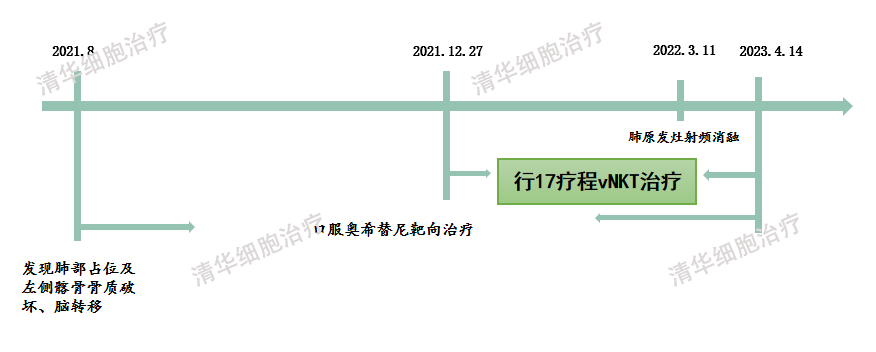

 

After listening to Professor Zhang's advice, Ms. Zhang decided to undergo vNKT cell immunotherapy in December 2021. The initial regimen was one course per month. In March 2022, radiofrequency ablation was performed on the primary lesion to reduce tumor burden. After multiple follow-up examinations, the overall evaluation was stable. As of April 2023, 17 courses have been completed, and regular follow-up examinations have shown no significant progression, achieving the expected effect.

Click to view imaging data from 2021 to 2022. Second evaluation: February 24, 2023
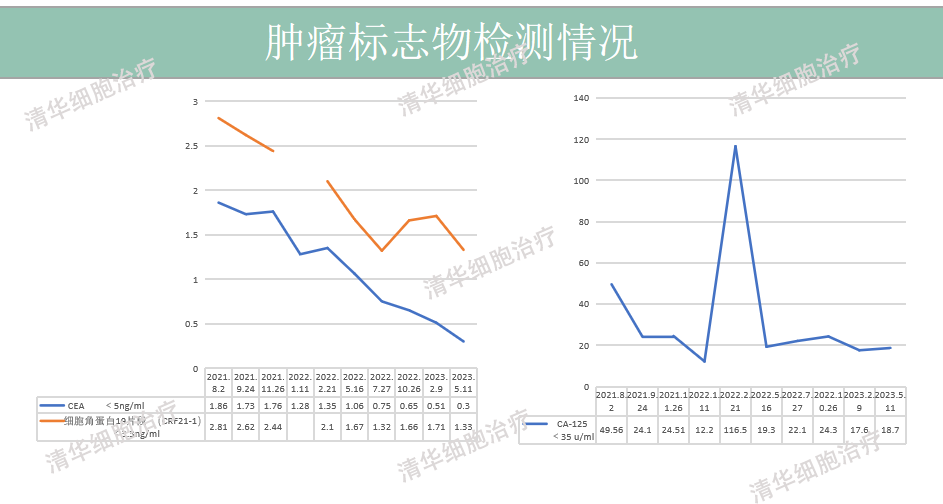
CEA, Cyfra21-1: No abnormalities were found from August 2021 to May 2023;
CA125: It gradually decreased to the normal range from August 2021 to September 2021, but significantly increased during the follow-up examination in February 2022. From May 2022 to May 2023, all follow-up examinations were within the normal range, and regular follow-ups were conducted.

Ms. Zhang's quality of life has been greatly improved, and her mental state is excellent. She feels more energetic and vigorous than before, returning to her pre-illness state. Her normal life and work have not been affected by the disease.
Lung cancer is one of the most common primary tumors, with over 70% of patients being in advanced stages at their initial visit, and a five-year survival rate of only 4%-6%[1]. Histologically, non-small cell lung cancer (NSCLC) accounts for the majority of lung cancer cases, constituting approximately 85% [2] of lung cancer cases. Distant metastasis is considered one of the primary causes of death in NSCLC patients, as metastasis often occurs upon diagnosis. Common metastatic sites include bone, brain, liver, and lymph nodes, with bone metastasis being the most prevalent. Bone metastasis, a primary malignant tumor that spreads to the skeletal system via blood or lymphatic pathways, significantly increases the recurrence rate and mortality of cancer patients.
Due to the high malignancy and late stage of Ms. Zhang's tumor, which had already metastasized to the brain and ilium, long-term survival was typically not expected. However, through targeted therapy with oral osimertinib and radiofrequency ablation to reduce tumor burden, combined with vNKT cell therapy to control tumor growth, a synergistic effect of 1+1>2 was achieved, resulting in long-term stability for Ms. Zhang's condition. In this process, vNKT cell immunotherapy played an indispensable role in reducing the risk of recurrence and metastasis. It not only eliminated residual tumor cells but also strengthened the immune system, thereby providing patients with long-term stability.

References:

[1] David E, Clark J, Cooke D, et al. The Role of Thoracic Surgery in the Therapeutic Management of Metastatic Non-Small Cell Lung Cancer. Journal of Thoracic Oncology: Official Publication of the International Association for the Study of Lung Cancer 2017, 12(11):1636-1645.
[2] Shirasawa M, Yoshida T, Matsumoto Y, et al. Impact of Chemoradiotherapy on the Immune-Related Tumor Microenvironment and Efficacy of Anti-PD-(L)1 Therapy for Recurrences after Chemoradiotherapy in Patients with Unresectable Locally Advanced Non-Small Cell Lung Cancer. European Journal of Cancer (Oxford, England: 1990) 2020, 140:28-36.

Click on the image

to view