Contact Us Careers
Lung Cancer

Malignant lung cancer, with two surgeries and two recurrences, maintaining stable disease condition is fundamental

时间:2026-04-27 人气:

If you find it difficult to understand the subsequent professional descriptions, you can quickly read through this text within two minutes.

Disease Overview


Ms. Liu discovered a mass in her left lung during a physical examination in March 2017. After undergoing a PET-CT scan in April of the same year, she was highly suspected of having lung cancer with partial lymph node metastasis in the lungs. She immediately underwent "left lower lung lobectomy + mediastinal lymph node dissection". Postoperative pathological diagnosis: moderately-to-poorly differentiated adenocarcinoma T4N2M1b stage IVA, involving the lung membrane, with visible intravascular cancer thrombus.
She then underwent six cycles of chemotherapy with pemetrexed disodium and carboplatin. In December 2017, she underwent chest regional proton radiotherapy.
From December 2017 to May 2018, she received six treatments of atezolizumab.
On September 28, 2019, a follow-up CT scan revealed multiple nodules in the left pleura and mediastinum, which had increased in size compared to previous scans, suggesting metastasis. A subsequent PET-CT scan indicated a nodule lesion at the aortic margin of the left upper lung, with increased glucose metabolism, suggesting a new lesion. On November 19, she underwent thoracoscopic assisted small incision thoracoplasty, left upper lung wedge resection, and chest wall nodule biopsy. ALK fusion protein test result: cancer cell ALK (D5F3) positive, no mutation detected in peripheral blood gene testing.
After discovering the metastasis, Ms. Liu underwent another surgery, and the postoperative pathological diagnosis was metastatic adenocarcinoma.
Shortly after surgery (January 2020), adenocarcinoma cells were found in the cerebrospinal fluid during a follow-up examination, leading to a diagnosis of meningeal metastasis. Oral administration of Alectinib for targeted therapy began on January 30, 2020.
Section

Pu    
Small
Knowledge

knowledge


Lung Cancer Staging

In lung cancer, a tumor that grows in a solid organ, T usually represents the size or extent of the tumor. T0-T4 increase progressively, with T0 indicating no primary lesion and Tis indicating carcinoma in situ, both of which are relatively early-stage tumors. T4 tumors have invaded the mediastinum, heart, major blood vessels, and other areas, and have a poor prognosis.

N represents involved lymph nodes, as we know that tumors often metastasize through lymph nodes. It increases progressively from N0 to N3, with N0 indicating no lymph node metastasis and N3 indicating supraclavicular lymph node metastasis.

M represents distant metastasis. M0 indicates no distant metastasis, while M1 indicates distant metastasis. Many M1 patients even lose the opportunity for radical surgery.



Ms. Liu had two surgeries and two recurrences. After learning about Professor Zhang Minghui's NKT treatment team at Tsinghua University School of Medicine, she turned to Professor Zhang Minghui for help
. After reviewing Ms. Liu's medical records, Professor Zhang Minghui made the following analysis and judgment:

1. The patient was diagnosed with a lung tumor in 2017, and at that time, pleural metastasis had already occurred, indicating a late stage.

2. The patient underwent postoperative radiotherapy and chemotherapy, but still developed metastatic lesions. Despite undergoing surgery again for the metastatic lesions, complete cure was not achieved, and soon thereafter, brain metastasis occurred, indicating a high malignant potential of the tumor.

3. The patient is currently undergoing targeted drug therapy. NKT cell immunotherapy can utilize immune cells to combat tumors without significant side effects. It is recommended to combine targeted drug therapy with NKT cell therapy to prolong survival and achieve long-term stability.



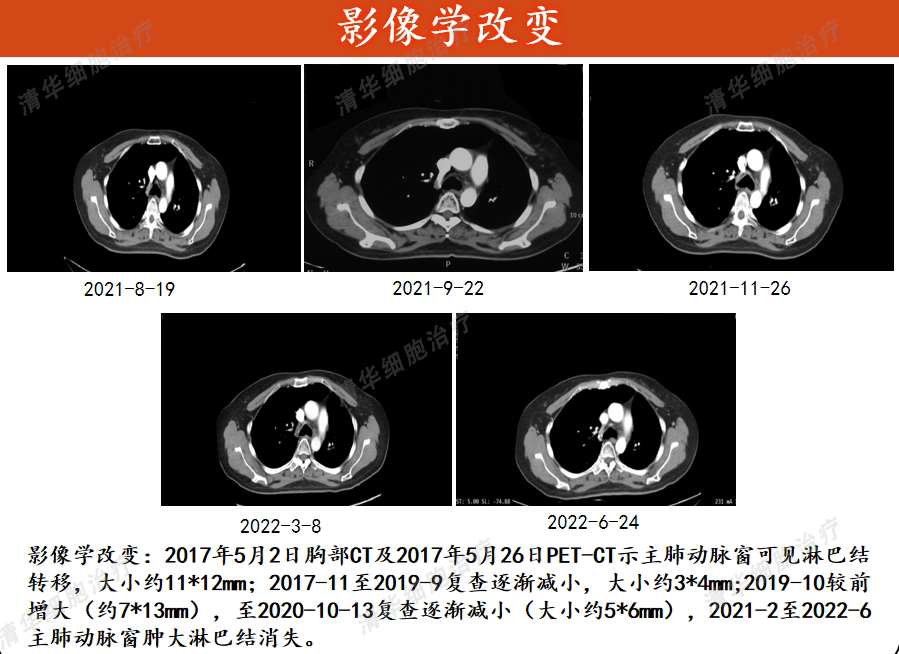
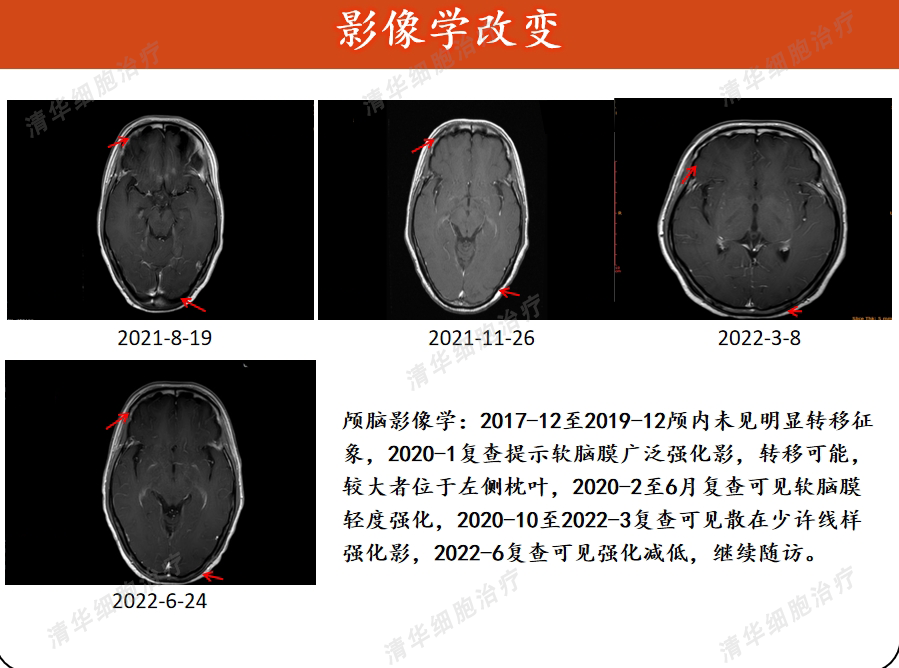
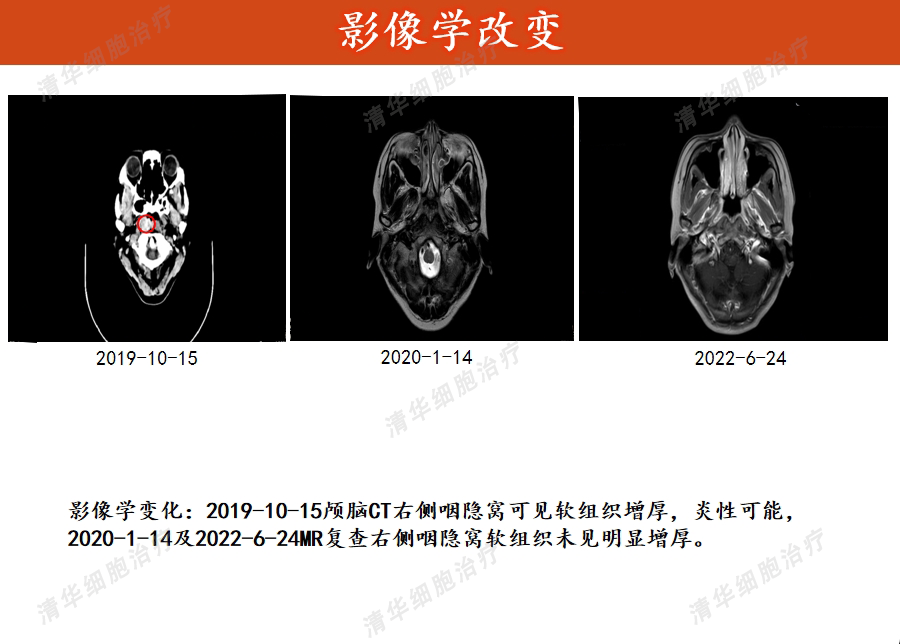
In terms of imagery
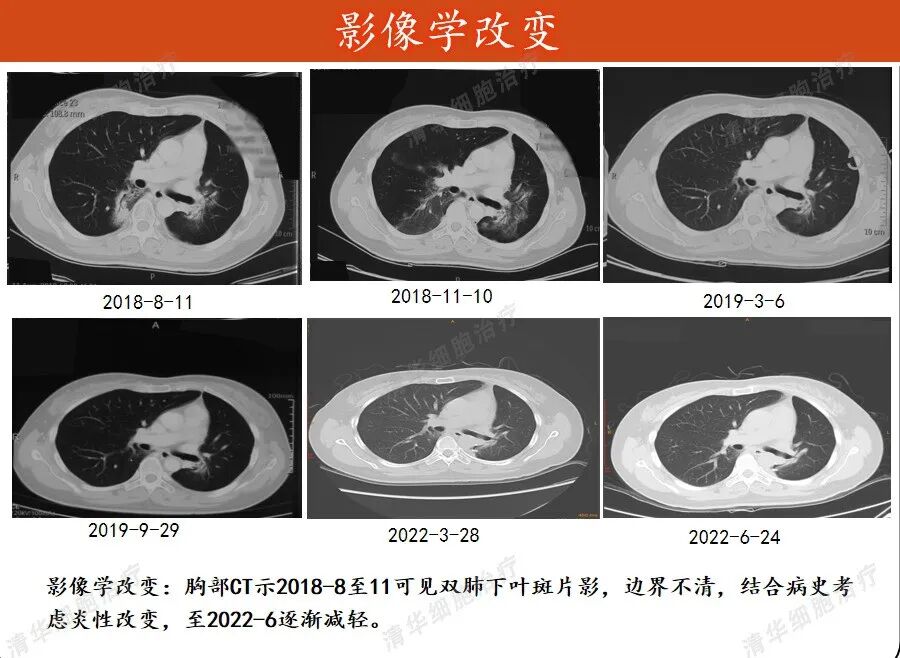
,


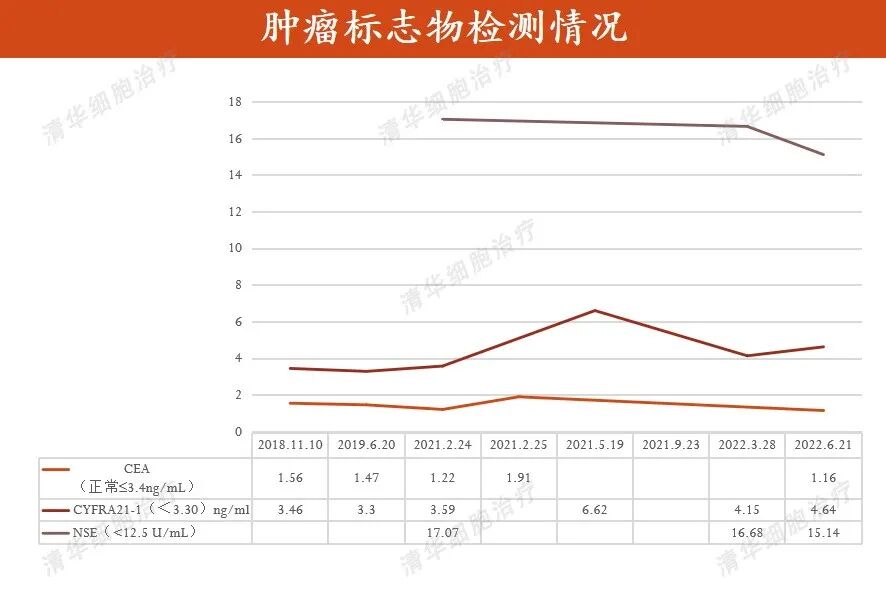
 Swelling  Mark< H306>


CEA levels were within the normal range during follow-up examinations from November 2018 to June 2022; CYFRA21-1 levels slightly increased during follow-up examinations from November 2018 to June 2022, requiring close monitoring; NSE levels were slightly higher than normal from February 2021 to June 2022, showing a gradual downward trend, and follow-up examinations are advised.


Quality of Life


Ms. Liu's quality of life has been greatly improved. Her mental state is excellent, and she feels more energetic and vigorous when doing things than before.


 Conclusion  s


Ms. Liu achieved the expected results after adopting NKT cell therapy. After a long-term follow-up, no new tumors were found, and the brain metastases remained stable, while her quality of life improved.

Popular science knowledge is provided for reference only. For individual patients, clinical treatment should prevail.    
Review of NKT classic cases

Click on the image

to view