About Lehe
乐于心,和与众,与己乐,与人和; 心宽念纯,百病无生。


乐于心,和与众,与己乐,与人和; 心宽念纯,百病无生。

▲Click on the blue text to follow us
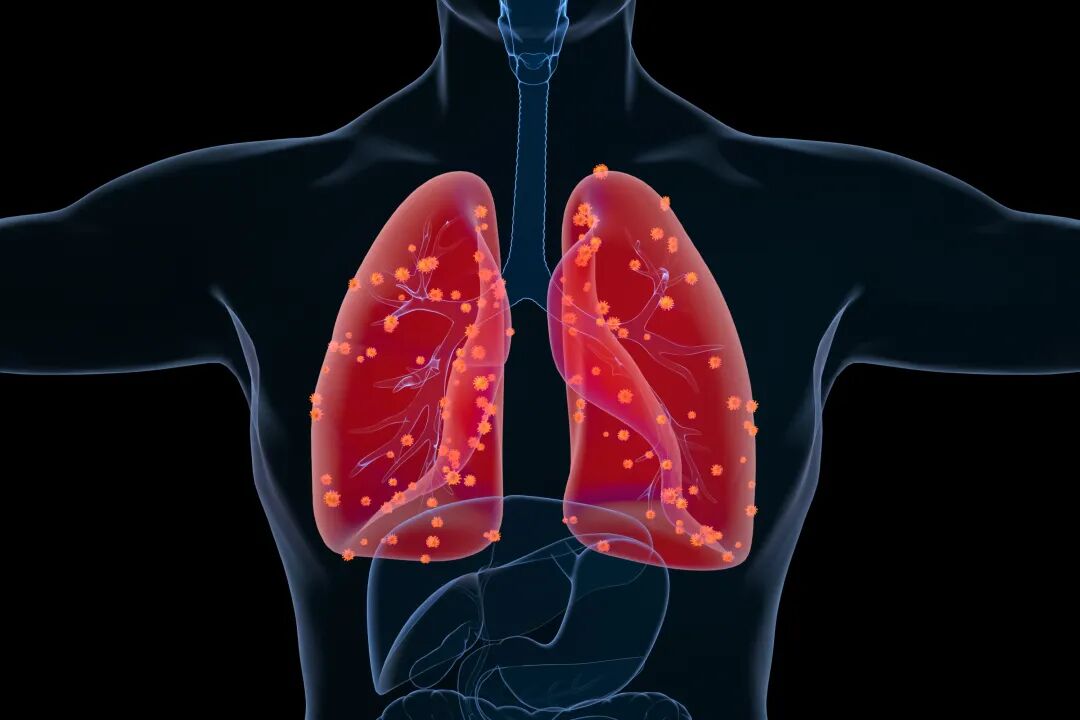
When many patients are diagnosed with cancer by doctors, it is akin to being sentenced to "death". "Cancer = death" may be the inherent perception of most people towards cancer. However, with the continuous exploration of science and technology and the advent of the information age, various cancer treatment information and methods are readily available, and there are numerous cases of cancer cures.
Mr. Ma, a 78-year-old patient with lung cancer and underlying conditions, has had lung nodules detected in a physical examination since 2017, a total of 7 years now. Let's learn about Mr. Ma's case together, what are the common characteristics of patients who have been cured of cancer or have achieved longer survival periods?
Treatment overview of Mr. Ma:
2017 CT scan:
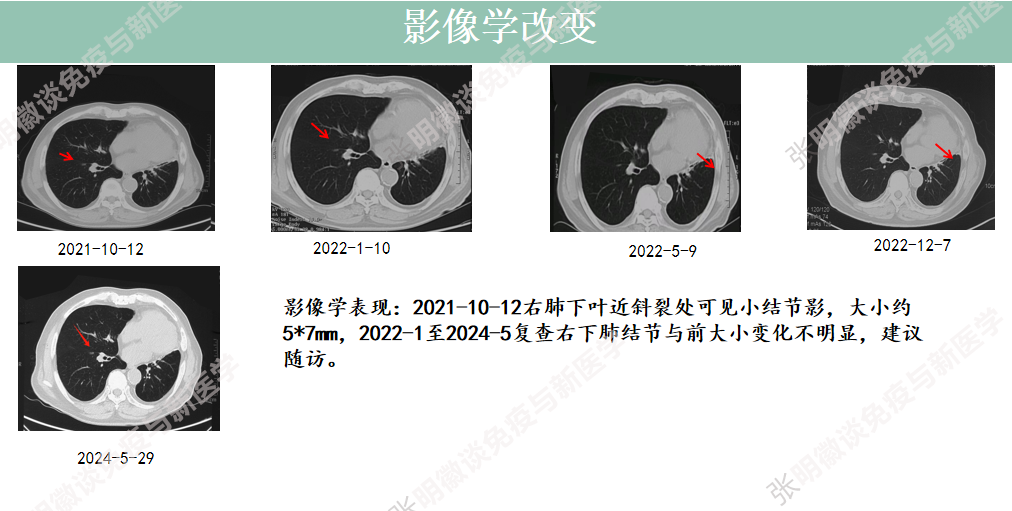
A light ground-glass density shadow with bullous change in the posterior segment of the left upper lobe, measuring approximately 2.8cmx1.6cm; a nodule near the interlobar fissure of the right lower lobe, measuring approximately 0.4cm×0.6cm, with a clear boundary.
From 2018 to 2019:
CT monitoring showed no significant changes in pulmonary nodules.
In August 2020, CT examination revealed:
A ground-glass density shadow with bullous changes in the posterior segment of the left upper lobe, which had increased in size compared to previous scans, measuring approximately 3.8cm×3.6cm, suggesting a possible lung cancer. Subsequent PET-CT imaging showed a shallow irregular ground-glass tumor in the posterior segment of the left upper lobe with mild metabolic activity, and enlarged lymph nodes with high metabolic activity in both hilar regions. Due to Mr. Ma's advanced age and multiple underlying diseases, surgery and pathological examination were not immediately performed. Instead, he began to receive blind administration of gefitinib targeted therapy. After 70 days of follow-up, the nodules in the left upper lobe showed no significant changes compared to previous scans, while the nodules in the right lower lobe had increased in size. Subsequently, treatment was switched to anlotinib, but was discontinued due to intolerance to hypertension.
May 2021:
The maturity of Da Vinci robotic surgery technology brought a turnaround to Mr. Ma's condition, enabling him to undergo surgical treatment despite his advanced age. Under general anesthesia, robot-assisted left lower lobe resection and mediastinal lymph node dissection were performed. Postoperative pathology: (left upper lobe) invasive adenocarcinoma, tumor size 3.5cmx2.5cmx2cm, no lymph node metastasis was observed.
July 2021:
vNKT cell therapy was adopted.
May 2024:
Follow-up revealed no signs of recurrence or metastasis.
1. Early detection, early treatment
Mr. Ma has always had a strong sense of health awareness, regularly undergoing physical examinations. He discovered lung nodules at an early stage and continuously monitored their changes, enabling him to timely detect and treat the malignant transformation of the nodules.
Early detection of cancer means that the tumor is usually smaller and has not spread widely, requiring less intensive treatment and lower treatment costs. This greatly increases the chances of successful treatment and prolongs survival.
In the multi-center randomized controlled study conducted in the Netherlands and Belgium from 2003 to 2006, the experimental group underwent low-dose spiral CT screening at baseline and at 1, 3, and 5.5-year intervals, and the two high-risk groups were followed up for 10 years. There were differences in screening results at baseline between the NLST (nodule management scheme based on diameter) and the NELSON trial (nodule management scheme based on volume). Follow-up results showed a cumulative decrease of 24% in lung cancer mortality over 10 years.
Tumor Growth and Invasion Trend Diagram
During the growth process of a tumor, it will sequentially break through the basement membrane, invade lymphatic vessels, and ultimately invade blood vessels and spread. Therefore, for high-risk cancer patients, it is necessary to undergo early cancer screening and seize the golden opportunity for tumor treatment - before the tumor breaks through the basement membrane, at the stage of carcinoma in situ.
2. The malignancy of the tumor is low
Different pathological types of the same tumor have different growth rates of cancer cells. The same type of cancer can be divided into many different subtypes, and the prognosis of different subtypes varies greatly. Taking lung cancer as an example, it can be divided into small cell lung cancer and non-small cell lung cancer. Among them, small cell lung cancer has a higher malignancy and faster proliferation rate, and is prone to metastasis in the early stage. However, Mr. Ma belongs to the relatively less malignant adenocarcinoma type of non-small cell lung cancer.
Different degrees of differentiation also affect the growth rate of cancer cells. The higher the degree of differentiation, the closer the tumor cells are to normal cells, the lower the malignancy, and the less likely the possibility of metastasis. On the contrary, tumors with low differentiation have a high degree of malignancy and are prone to metastasis.
3. Actively Seeking Second Medical Advice
If you fail to detect and treat cancer in its early stage;
and if the cancer type and pathological classification indicate a higher malignant degree of the tumor.
Then, you can actively seek second medical advice!
There are many methods for cancer treatment: surgery, chemotherapy, radiotherapy, targeted therapy, immunotherapy, etc. It is not just a matter of using them all at once. It is necessary to consider not only the patient's physical condition, tumor pathological type, biological characteristics, staging, gene testing results, etc., but also the patient's psychology, expectations, and economic situation. A comprehensive and reasonable plan should be made to use these treatment methods at the appropriate time points, in order to achieve the greatest therapeutic effect, which can not only contain or eliminate the tumor, prolong survival, but also ensure the patient's quality of life.

Although Mr. Ma successfully underwent surgery, he did not receive any additional treatment after the operation, and was therefore very concerned that the tumor might not be completely eradicated through surgery alone. To prevent future recurrence and metastasis, Mr. Ma and his family, recommended by a friend, sought the help of Professor Zhang Minghui's Lehexin Medical team at Tsinghua University School of Medicine, hoping to try new treatment methods to prevent recurrence and metastasis. After comprehensively understanding Mr. Ma's condition, the team provided a second diagnosis and treatment suggestion based on a comprehensive evaluation:
1. Mr. Ma underwent surgery with the assistance of a robot, and it was evident that all visible lesions had been removed, which was a critical opportunity for following up with vNKT treatment.
2. However, the diagnosis of invasive adenocarcinoma suggests that there are loopholes in the patient's immune system that the tumor can exploit; and the possibility of tumor cell dissemination cannot be ruled out. Moreover, Mr. Ma is elderly, has weak immunity, suffers from numerous underlying diseases, and has small pulmonary nodules, making him unable to tolerate chemotherapy and radiotherapy after surgery. Comprehensive analysis indicates that this is a suitable situation and opportunity for vNKT intervention.
3. vNKT treatment utilizes powerful immune cells to kill tumor cells that may remain in the body but are undetectable, while enhancing and improving the patient's immune system. Most importantly, vNKT cell therapy has few side effects and is easily tolerated by patients. Combining vNKT cell therapy with conventional surgery effectively reduces the risk of recurrence and metastasis.
4. At the same time, psychological status is also an important factor in determining the patient's prognosis. Lehe team noticed Mr. Ma's anxiety and concern after being diagnosed with a tumor. During the treatment process, they paid attention to combining positive psychological methods to rebuild the patient's psychological state and establish confidence in recovery. Click the link: to teach you some methods to learn mindfulness-based stress reduction.
Conclusion and Comments
Mr. Ma underwent vNKT cell immunotherapy in July 2021, and as of May 2024, he has completed 21 courses of treatment. Multiple follow-up examinations during this period have not shown any signs of recurrence or metastasis.
Imaging changes
Cancer treatment is a complex scientific system. If you are not as fortunate as Mr. Ma, who has an early-stage tumor with a low malignant potential and a favorable pathological type, you still need to adjust your mindset, actively seek second medical opinions, bridge the information gap between treatment plans, and develop a well-planned and reasonable personalized treatment plan. With these efforts, I believe you can achieve an ideal outcome.
Contact Us
Scan QR Code
to communicate with Professor Zhang Minghui's team
Click on the image to view past exciting content


Written by: Zhao Tuantuan
Reviewed by: Qiao Jiacheng, Wang Ying, Gao Chen
Edited/typeset by: Zhao Tuantuan
Address: Room 1101 (Unit 101), 11th Floor, Building 1, No. 7 Courtyard, Kexueyuan Road, Life Science Park, Changping District, Beijing
Phone:010-8265 9866
Email:lehemedneo@hotmail.com