Contact Us Careers
Breast Cancer

"Pink killer" breast cancer has been under control for 3 years after surgery

时间:2026-04-22 人气:

If you cannot understand the subsequent professional descriptions, just take two minutes to read through this text.

Disease Overview


Ms. Yu underwent breast ultrasound examination in September 2019 due to a cystic mass found in her left breast, which revealed "solid nodules with calcification in the left breast, no obvious enlarged lymph nodes, BI-RADS category 4b". A biopsy of the left breast mass was performed, and the pathological diagnosis was adenocarcinoma.
In October 2019, she underwent breast-conserving radical mastectomy and sentinel axillary lymph node biopsy. Postoperative pathology: invasive breast cancer with high-grade intraductal carcinoma in the left breast mass, with a maximum diameter of approximately 1.1cm, locally accompanied by suspicious intravascular tumor thrombus, and no clear nerve invasion. Pathological TNM staging: pT1cN2a. Immunohistochemical results: CD31 (indicating intravascular tumor thrombus), d2-40 (indicating intralymphatic tumor thrombus), ER (approximately 90%+), PR (approximately 90%+), CerbB-2 (+++). Axillary lymph node biopsy showed metastatic cancer: 4/12, and sentinel lymph node biopsy showed metastatic cancer 2/4.
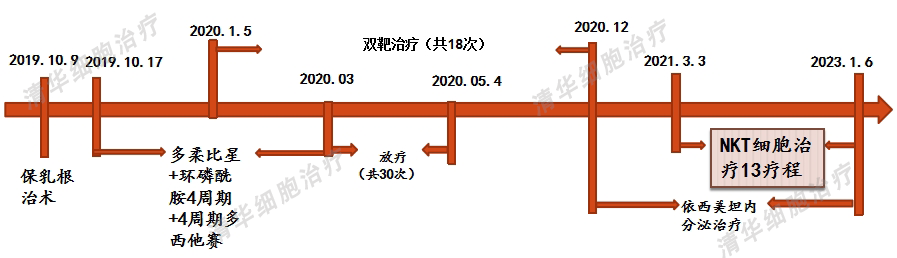
On October 17, 2019, she underwent chemotherapy: four cycles of doxorubicin + cyclophosphamide + four cycles of docetaxel (a total of eight treatments by March 2020). From January 5, 2020, to December 17, 2020, she underwent dual-target therapy (a total of 18 treatments).
From March 23, 2020, to May 4, 2020, she underwent radiotherapy (a total of 30 treatments), and is currently undergoing endocrine therapy with oral exemestane.
Section
Pu
Small
Knowledge

knowledge


Immunohistochemistry of breast cancer

Breast cancer is often referred to as the "pink killer," with its incidence rate ranking first among female malignancies. Different breast cancers vary greatly in treatment options and prognosis. There are several important indicators for breast cancer: Her-2, ER, and PR.

Her-2, fully known as human epidermal growth factor receptor 2, is an oncogene. When the HER-2 gene is highly expressed in cancer cells, excessive HER-2 protein is produced on the cell membrane, stimulating the rapid growth of cancer cells and increasing their aggressiveness. Therefore, patients with HER-2 positive breast cancer have a more severe condition, are more prone to recurrence and metastasis, and have a shorter survival period, which clinicians refer to as poor prognosis. However, targeted therapy for HER-2+ can improve patients' chances of survival.

ER and PR stand for estrogen receptor and progesterone receptor, respectively. Patients with positive ER and PR can undergo endocrine therapy in addition to chemotherapy after surgery, which can significantly extend their survival period and improve prognosis.

If ER, PR, and Her-2 are all negative, it is what we commonly refer to as triple-negative breast cancer, for which treatment options are limited, and the patient is insensitive to both targeted drugs and endocrine therapy, resulting in a poor prognosis.



Ms. Yu completed surgery and postoperative radiotherapy and chemotherapy, but due to the discovery of axillary lymph node metastasis during the operation, she was very worried about recurrence in the future, so she sought the help of Professor Zhang Minghui's NKT treatment team at Tsinghua University School of Medicine. After carefully reviewing the case presentations of NKT cell therapy, she particularly hoped to try it to reduce the probability of recurrence .  
After reviewing Ms. Yu's medical records, Professor Zhang Minghui made the following analysis and judgment:
1. The patient has breast cancer, which had already metastasized to the lymph nodes at the time of diagnosis. She underwent radical mastectomy and completed postoperative conventional radiotherapy and chemotherapy, as well as endocrine therapy to date.  
2. The patient's tumor site is suspected of having vascular and lymphatic cancer thrombi, which suggests that the tumor may metastasize through blood vessels or lymphatic vessels.  
3. NKT therapy utilizes powerful immune cells to eliminate tumor cells that may remain in the body but are undetectable, with essentially no side effects, making it very patient-friendly. After completing conventional treatment, NKT cell therapy is used to maintain long-term systemic stability.  

After listening to Professor Zhang's advice, Ms. Yu decided to undergo NKT cell immunotherapy in March 2021. The initial plan was one course per month, and after multiple follow-up examinations, the overall evaluation was stable.
As of January 2023, 13 courses have been completed. It has been over three years since the surgery, and no signs of recurrence have been detected during the treatment period, achieving the expected results.

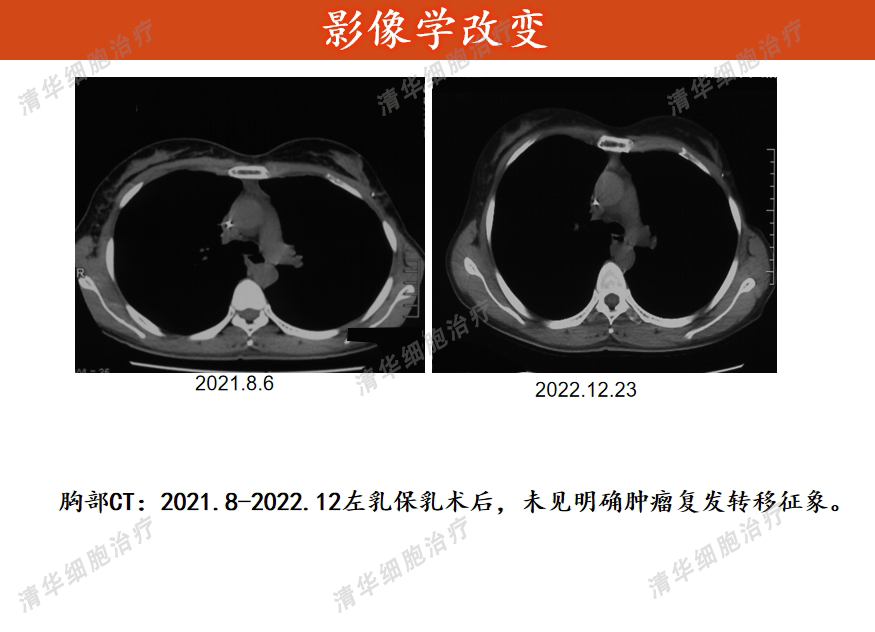
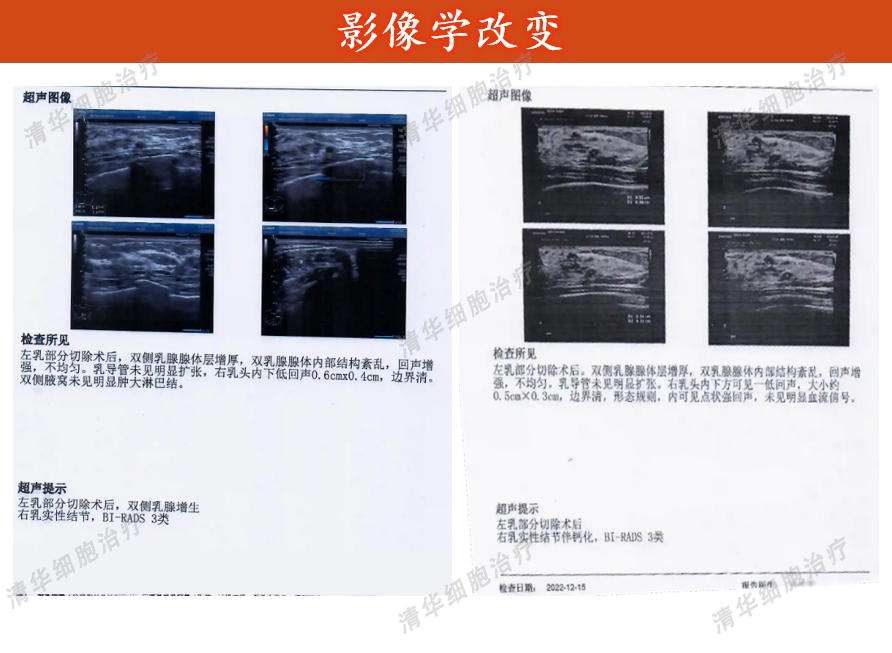
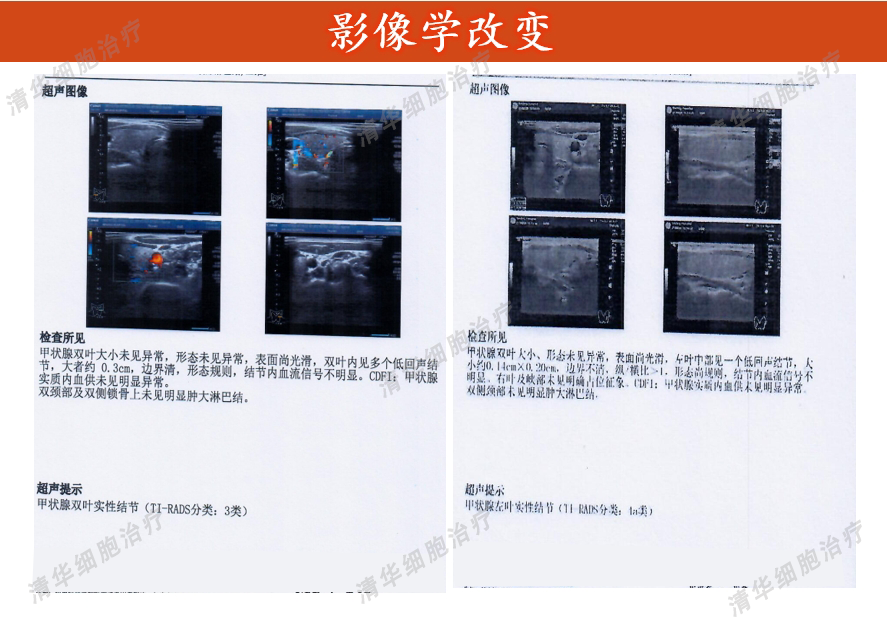
Imaging


Tumor markers

 
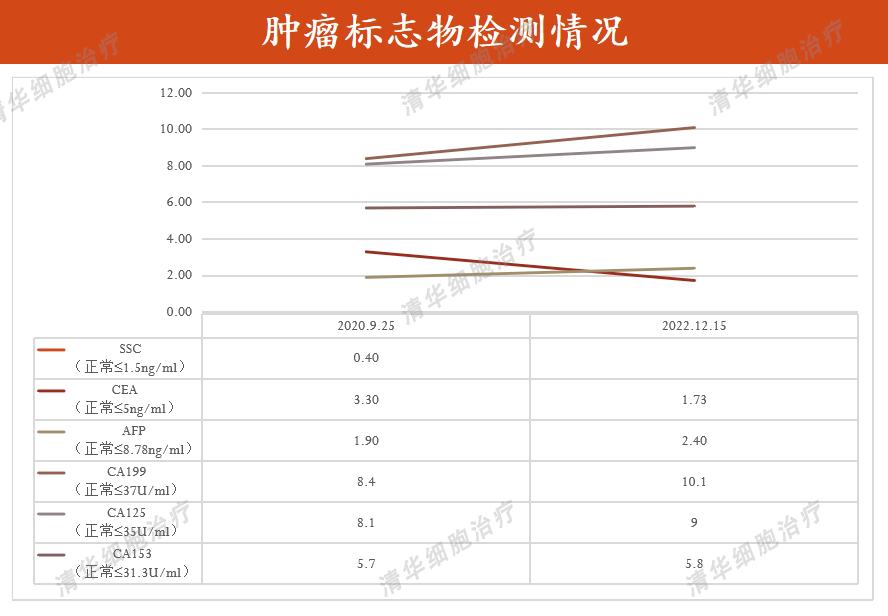
Tumor markers: SSC was normal in September 2020 and has not been rechecked since; CEA, AFP, CA199, CA125, and CA153 tested normal from September 2020 to December 2022, but follow-up is recommended.


 Conclusion and Comments


Ms. Yu's quality of life has been greatly improved. Her mental state is excellent, and she feels more energetic and vigorous than before, returning to her pre-illness state. She leads a normal life and works without being affected by the disease. The latest quality of life treatment score is 82.5, and she reports that her hair has become thicker. Ms. Yu underwent immediate surgical treatment after discovering the tumor. Fortunately, Ms. Yu's ER, PR, and Her-2 were all positive, providing more options for subsequent treatment. After combining NKT cell immunotherapy, the possibility of recurrence was minimized. Long-term follow-up results also confirm this.
Breast cancer is one of the most common malignant tumors in the world, and its incidence rate is increasing every year. In 2020, the latest global cancer data released by the International Agency for Research on Cancer of the World Health Organization showed that the number of new cases of breast cancer worldwide reached 20,000. From the perspective of epidemiology and subsequent drug development, ER-positive, PR-positive, and Her-2-positive breast cancer show substantial differences in treatment methods. The NCCN breast cancer guidelines state that both estrogen and progesterone receptor-negative and positive breast cancer require adjuvant chemotherapy and targeted therapy after surgery, and ER and PR-positive breast cancer can additionally choose endocrine therapy. For triple-positive breast cancer, the earlier the stage, the higher the cure rate and the longer the survival time. The early cure rate can reach 90%-95%, but if metastasis is found, the cure rate in the middle and late stages will significantly decrease.
Ms. Yu's tumor was in a high-risk situation when discovered, with suspicious vascular thrombi and lymph node metastasis, which are unfavorable for prognosis. However, with the combination of various treatments, Ms. Yu's condition has been stable for a long time. In this process, NKT cell immunotherapy played an indispensable role in reducing the risk of recurrence and metastasis. It not only eliminates residual tumor cells but also strengthens the immune system, thereby achieving long-term stability for patients .
Science popularization knowledge is for reference only. Individual patients should seek medical treatment based on clinical experience.   

Reference:< H451>

【1】Ma, D., Yang, Q., Yin, K., Shi, P., Chen, X., Dong, T., Shang, X., & Tian, X. (2023). Analysis of the clinicopathological characteristics and prognosis of triple-positive breast cancer and HER2-positive breast cancer-A retrospective study. Frontiers in oncology, 12.

NKT Classic Case Review

Click on the image

to view