Contact Us Careers
Breast Cancer

What should I do if I am still worried about breast cancer after targeted therapy?

时间:2026-04-22 人气:

If you cannot understand the subsequent professional description, you can finish reading this text in two minutes

Disease Overview

Ms. Li discovered a breast lump in March 2020 and underwent a needle biopsy, which indicated invasive ductal carcinoma. In April 2020, she underwent left mastectomy and lymph node dissection. Postoperative pathology: adenocarcinoma with invasive ductal carcinoma grade II, partially classified as high-grade intraductal carcinoma (80%), intravascular cancer thrombus was found; no nerve invasion; immunohistochemistry: ER (10%+ weak-moderate staining), PR (-), cerbB-2 (3+), K1-67 (40%+). From April 2020 to June 2020, she underwent 4 courses of PCHP chemotherapy, and from April 2020 to April 2021, she received dual-target therapy.
Department

Pu
Small
Knowledge

knowledge


Immunohistochemistry of breast cancer

Her-2, whose full name is human epidermal growth factor receptor 2, is a proto-oncogene. When the HER-2 gene is highly expressed in cancer cells, excessive HER-2 protein will be produced on the cell membrane, stimulating the rapid growth of cancer cells and increasing their invasiveness. Therefore, patients with HER-2 positive breast cancer have a more dangerous condition, are more prone to recurrence and metastasis, and have a shorter survival period, which is clinically referred to as poor prognosis. However, targeted therapy for HER-2+ can improve the patient's chances of survival.

ER and PR stand for estrogen receptor and progesterone receptor, respectively. Patients who are positive for both ER and PR can undergo endocrine therapy in addition to chemotherapy after surgery, which can greatly extend their survival period and improve their prognosis.

If ER, PR, and Her-2 are all negative, it is what we commonly refer to as triple-negative breast cancer, for which treatment options are limited. It is insensitive to both targeted therapy and endocrine therapy, and the prognosis is poor.
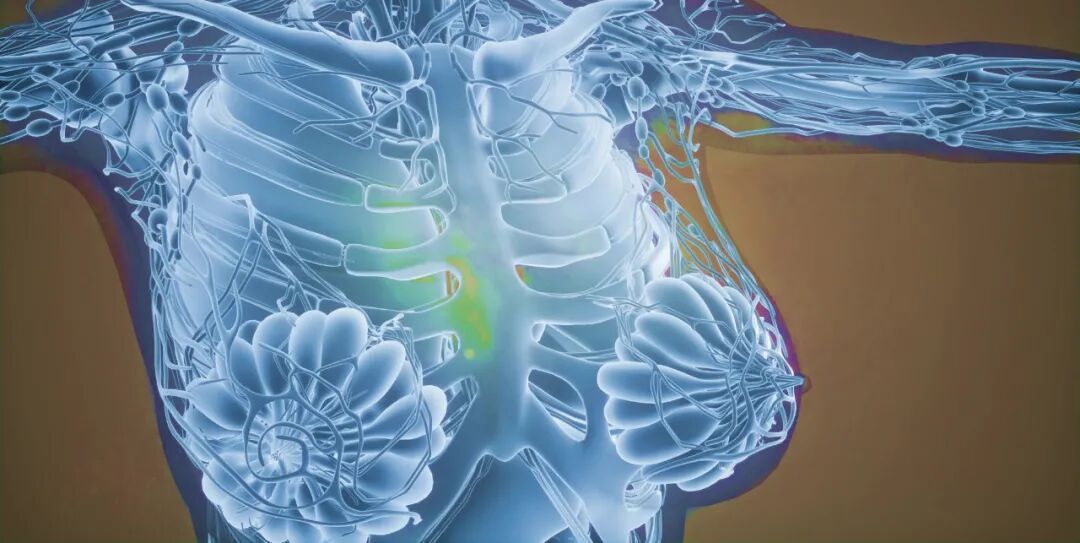
Her-2 (+++) gave Ms. Li the opportunity for targeted therapy, and she completed targeted therapy after surgery. However, Ms. Li's ER and PR were negative, indicating a high risk of recurrence. Ms. Liu was very worried about this and turned to Professor Zhang Minghui's team for help.
After reviewing Ms. Li's medical records, Professor Zhang Minghui made the following analysis and judgment:

1. Although the patient underwent radical surgery and the primary visible lesion was removed during the operation, the presence of intravascular cancer thrombus indicates a high risk of postoperative metastasis.

2. The patient's ER and PR status are negative, making endocrine therapy inapplicable. Postoperative chemotherapy and targeted therapy have been completed, and conventional treatment typically ends here.

3. To achieve long-term stability, NKT therapy can be adopted to eliminate potentially invisible tumor cells. Additionally, NKT therapy has almost no side effects, significantly reducing the risk of metastatic recurrence.
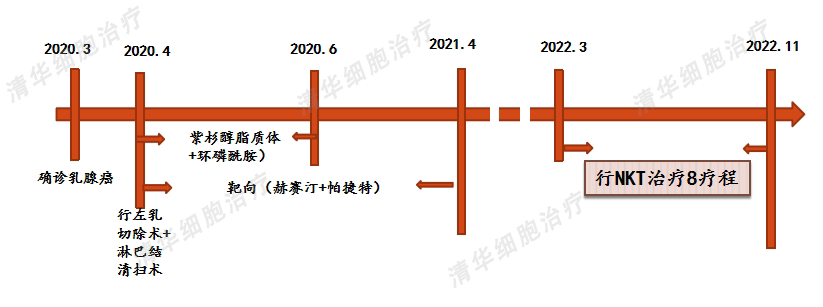
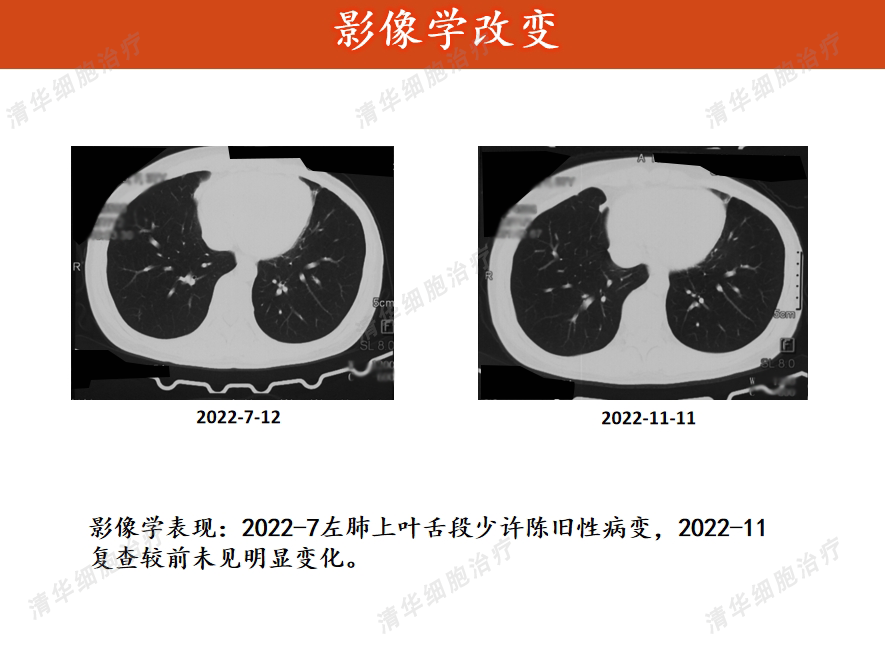
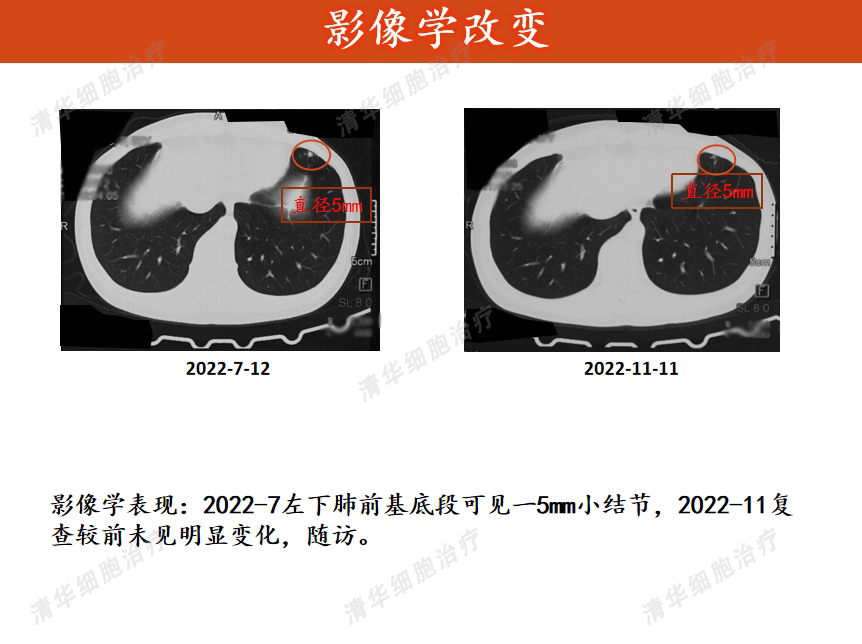
From March 2022 to November 2022, Ms. Li completed the first phase (8 courses) of treatment. During this follow-up examination, no clear signs of tumor recurrence were observed, and her overall condition remains stable.


Imaging
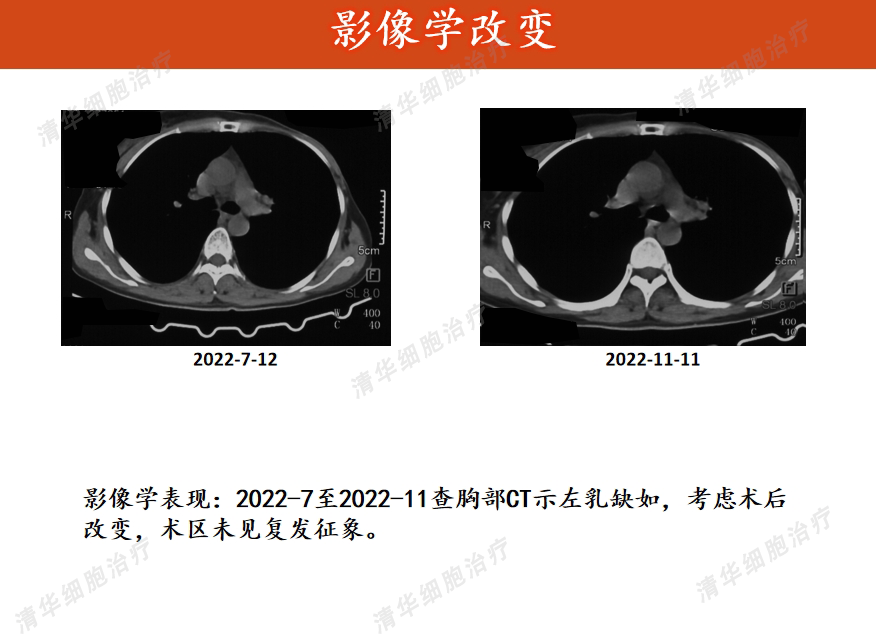
,  


Tumor markers

 
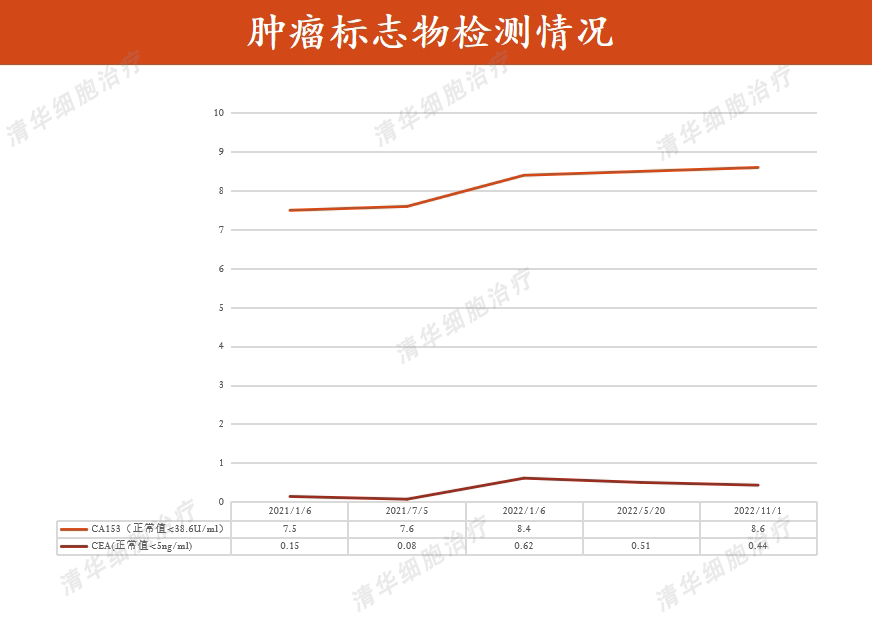
Tumor markers: From January 2021 to November 2022, no abnormalities were found in CA153 and CEA.

 Conclusion and Comments


Over the course of more than half a year, Ms. Li completed the first phase of treatment. Follow-up examinations revealed no clear signs of tumor progression, indicating overall stable disease. She reported normal daily life and work; her hair color turned black; her skin changed from dull, yellowish, and rough to ruddy, delicate, fair, and translucent; the frequency of colds and fever in spring and winter decreased compared to the past, and her quality of life score was 88. We look forward to new positive news from subsequent treatments and follow-ups.
The mortality rate of young patients with Her-2 positive ER/PR negative breast cancer is higher than that of positive patients, and age and subtype are strong independent prognostic factors for breast cancer. In another study, among 112 breast cancer patients, the group with both ER and PR negative had the lowest survival rate (72.2%) compared to patients with one positive ER or PR.
Ms. Li underwent radical surgery, but postoperative pathological results indicated a residual tumor risk. NKT cell therapy not only eliminates residual tumor cells but also strengthens the immune system, thereby providing long-term stability for patients.
Scientific knowledge is provided for reference only, and individual patients should follow clinical medical advice.   

Reference:< H335>

【1】Recăreanu F, Simionescu C, Georgescu CV, Pirici E. Ductal invasive mammary carcinoma--clinicopathological prognostic factors related to immunohistochemical expression of hormonal receptors and Her2/neu oncoprotein. Rom J Morphol Embryol. 2011; 52 (3 Suppl).
NKT Classic Case Review

Click on the image

to view< H361>