Contact Us Careers
Other Solid Tumors

For sarcomas with a low incidence rate, immunotherapy provides patients with an additional option

时间:2026-04-22 人气:

If you cannot understand the subsequent professional description, you can finish reading this text in two minutes.

Overview of the disease


In March 2014, Ms. Guo discovered a painless tumor on her right lower gum. She underwent surgery to remove the tumor, and the postoperative pathology indicated a soft tissue sarcoma, favoring mesenchymal chondrosarcoma or extrabony Ewing's sarcoma, with invasion of bone tissue.
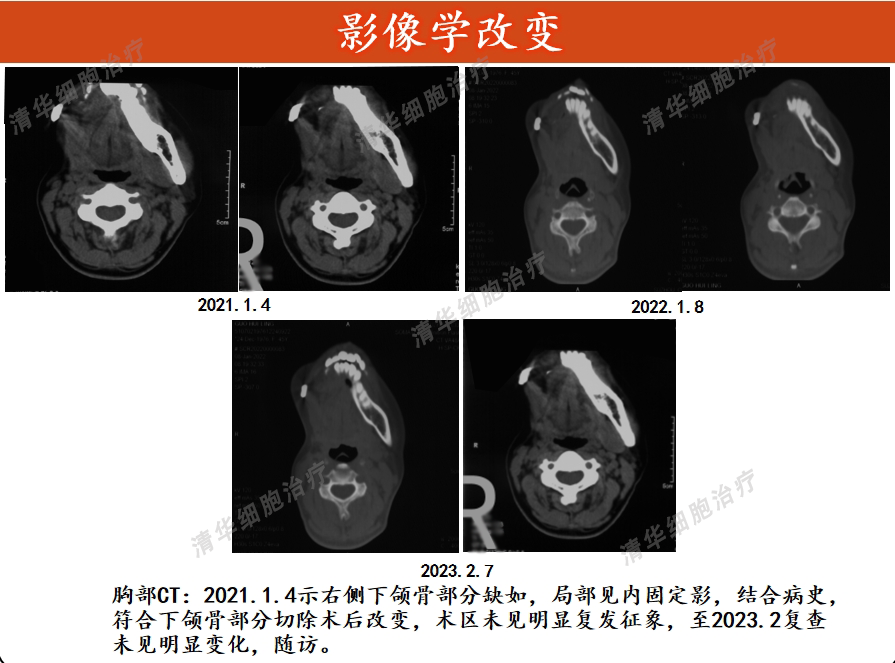
Due to the bone tissue invasion, Ms. Guo underwent a second surgery on June 25, 2014, to partially remove her right mandible.
After two surgeries, Ms. Guo had a stable period of four years, thinking that the tumor had been eradicated.
However, in March 2018, a chest CT scan revealed multiple nodules in both lungs, suggesting metastasis. The biopsy pathology confirmed soft tissue sarcoma and lung metastasis. The fact that metastasis occurred nearly four years after surgery indicates that the expression level of metastasis-related proteins may be low, suggesting a low malignant potential, which is a stroke of luck amidst adversity.
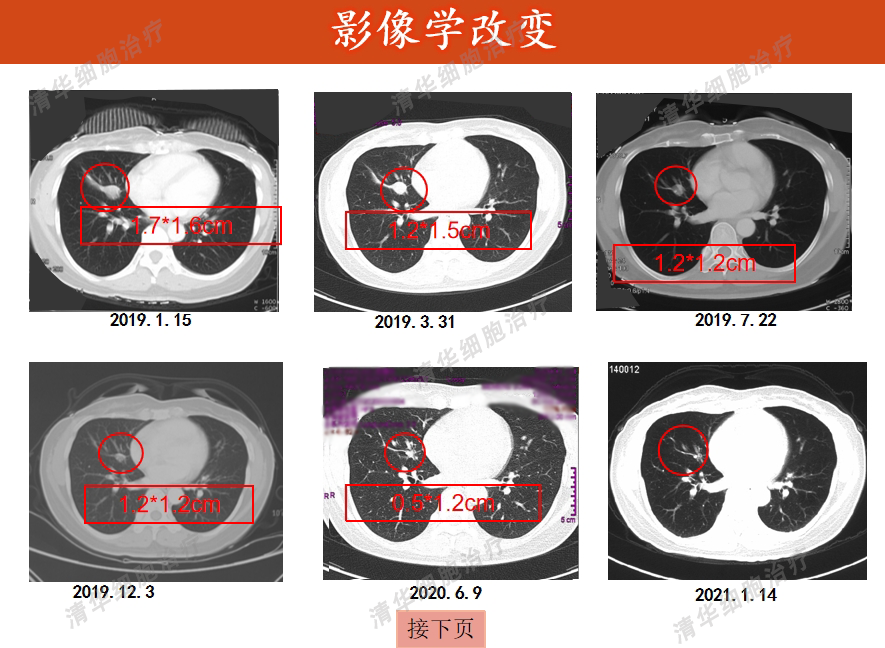
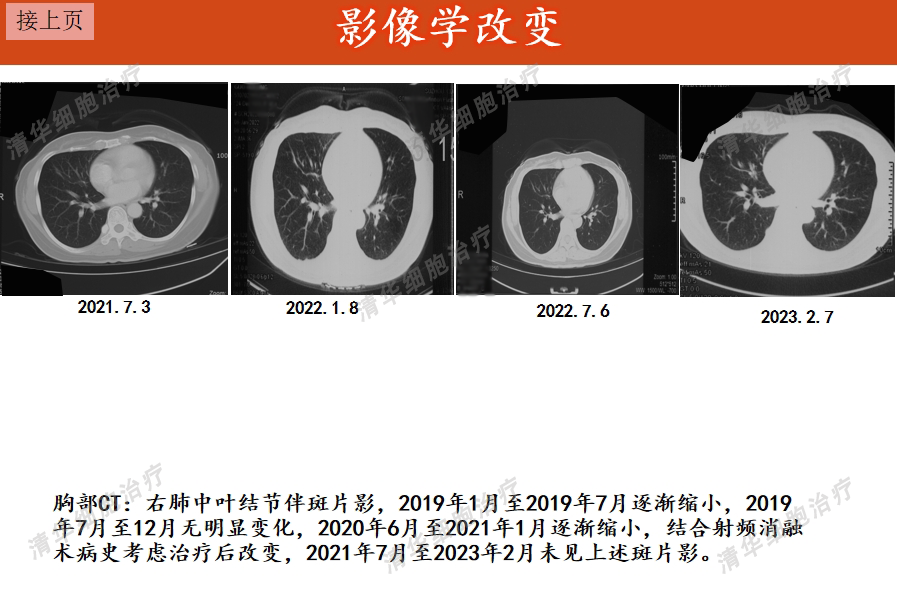
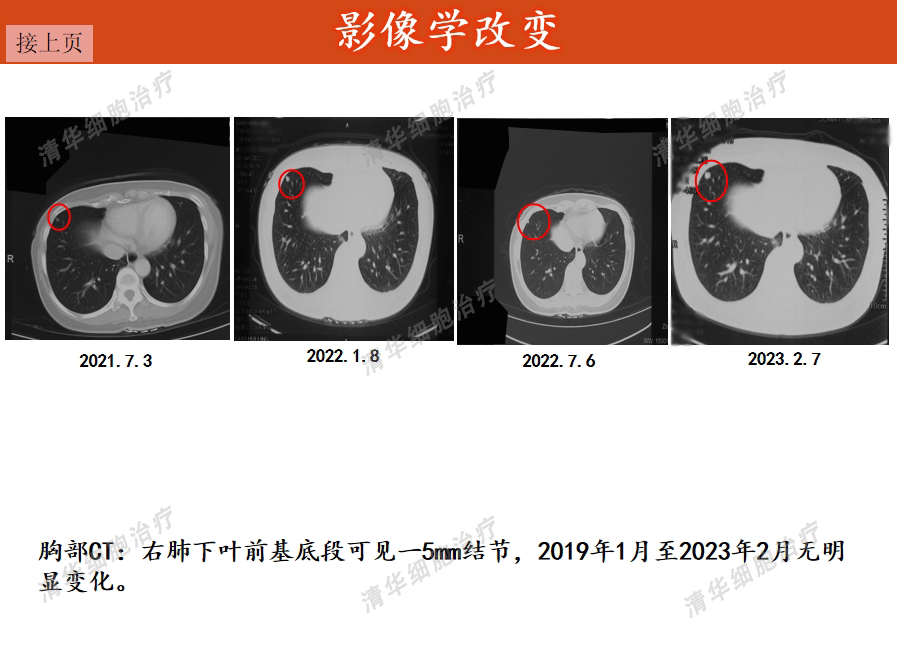
Six months later, Ms. Guo underwent radiofrequency ablation to treat the metastatic lesion in her right lung. In January 2019, a follow-up chest CT scan showed that the nodules in the middle lobe of her right lung were slightly smaller than before, indicating changes due to the radiofrequency ablation.
Department
Pu    
small
Knowledge

Recognition


Ewing's sarcoma  
Sarcoma is also a type of malignant tumor, originating from mesenchymal tissues such as bone, fibrous, and lymphatic tissues. Common examples include osteosarcoma, chondrosarcoma, and fibrosarcoma. The difference between sarcoma and cancer also lies in prognosis. The incidence rate of sarcoma is much lower than that of cancer, and most sarcomas are more difficult to detect and address in advance. Secondly, as malignant tumors, sarcomas are less thoroughly researched due to the small sample size compared to many common cancers, and there are relatively fewer treatment options available.  
Ewing's sarcoma, also known as Ewing's sarcoma or Ewing's tumor (formerly known as primitive neuroectodermal tumor, PNET), is a malignant tumor originating from bone or soft tissue. The incidence rate among the general population is approximately one in one million, and it primarily affects children and adolescents. Cases in newborns and infants have occasionally been reported. It mainly occurs in the pelvis, femur, tibia, humerus, and ribs, and also frequently appears in soft tissues adjacent to the bones (such as the chest wall, gluteal muscles, pleural cavity, and cervical muscles). It is the second most common primary malignant bone tumor affecting children and adolescents, and is highly aggressive.  

Although the metastatic foci were reduced in size (but not eliminated) through radiofrequency ablation, there is a high likelihood that the tumor will continue to progress without additional intervention. Ms. Guo is deeply concerned about this. By chance, she and her family learned about Professor Zhang Minghui's NKT technology from Tsinghua University School of Medicine through a friend's recommendation, and carefully reviewed the demonstration cases of NKT cell therapy. They are particularly eager to try it to reduce the risk of developing new metastatic foci in the future.
After reviewing Ms. Guo's medical records, Professor Zhang Minghui made the following analysis and judgment:

1. Although the patient underwent two surgical treatments, lung metastasis still occurred four years later, indicating that the tumor remained active and had not been completely eradicated.

2. It was highly prudent for the patient to immediately opt for non-invasive radiofrequency ablation after discovering the lung metastasis, which reduced the tumor burden and paved the way for subsequent NKT cell therapy. .

3. After reducing tumor burden, if one sits back and waits for death, the residual tumor is likely to make a comeback. Next, it is necessary to suppress the tumor cells in the body to prevent further tumor development. NKT therapy utilizes powerful immune cells to eliminate those tumor cells that may remain in the body and remain undetected, with essentially no side effects. Combining NKT cell therapy after reducing tumor burden can achieve systemic long-term stability.
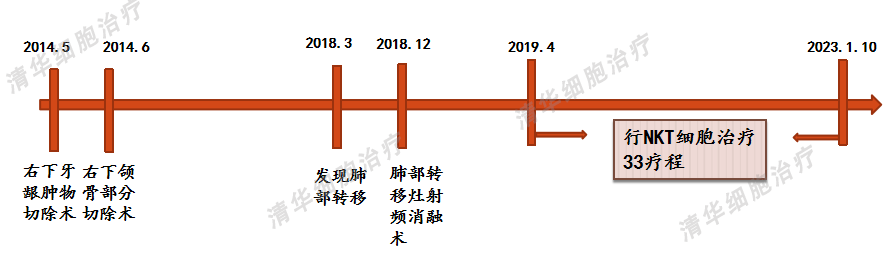
 

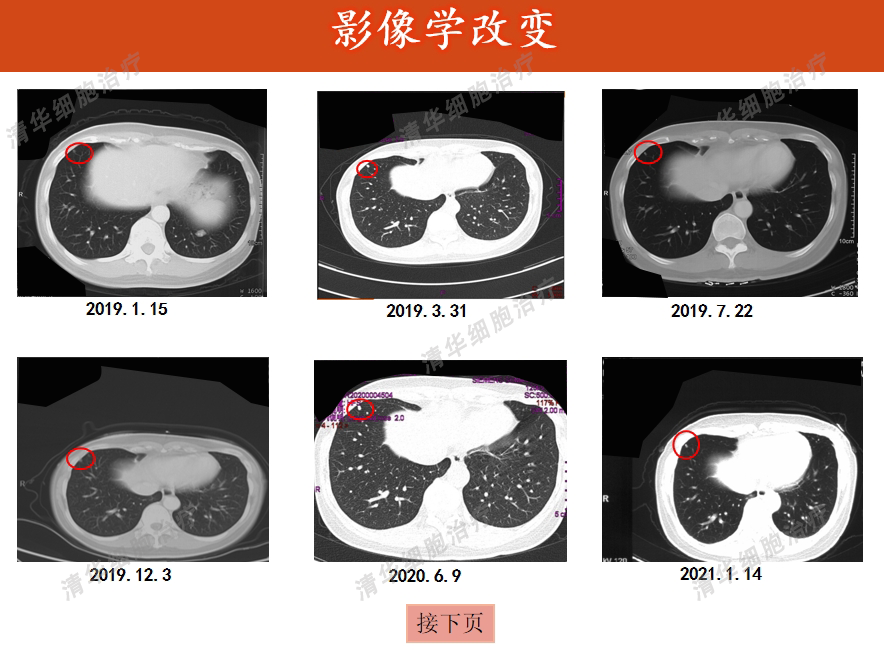
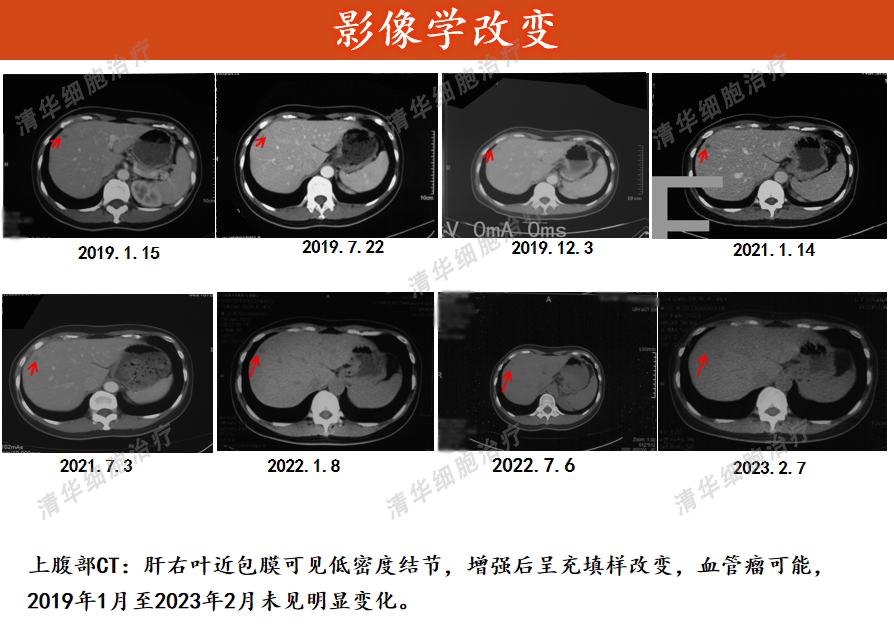
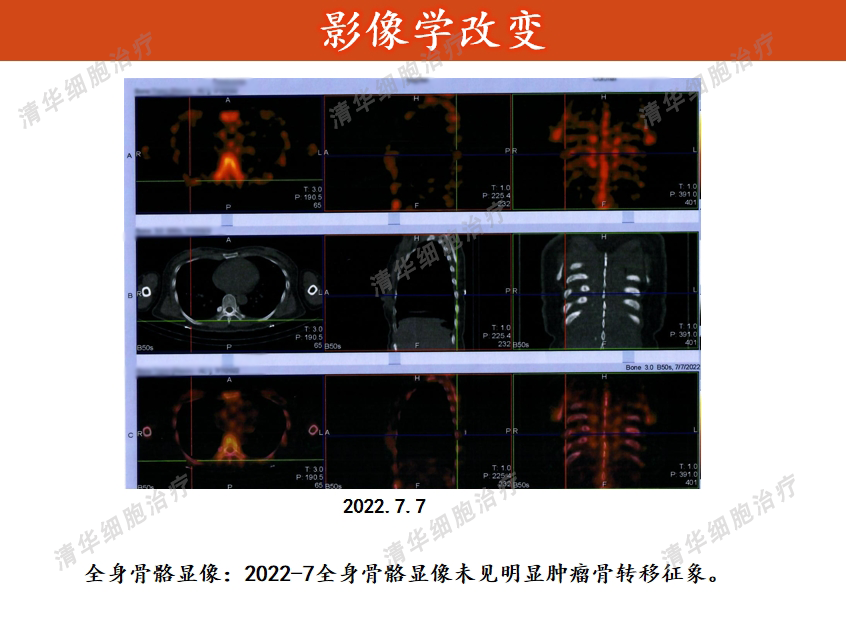
Ms. Guo received NKT cell immunotherapy in April 2019 and has completed 33 courses (as of January 2023) . During this period, multiple follow-up examinations showed no obvious signs of tumor progression, and the overall evaluation is stable!

Imaging


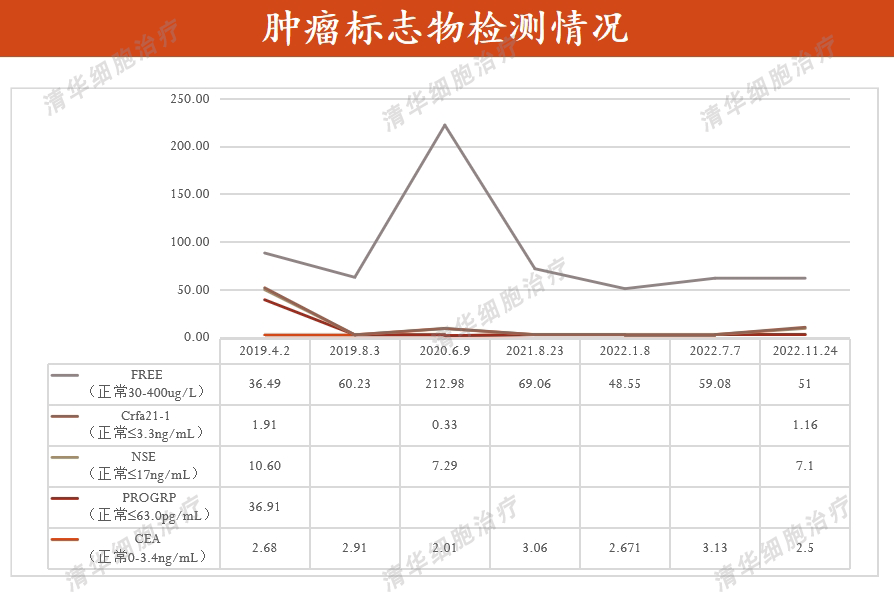
Tumor markers

 
From April 2019 to November 2022, no abnormalities were found in the tumor markers tested.

 Conclusion and Comments


Ms. Guo underwent surgical treatment upon discovering the tumor, but metastasis occurred post-surgery. She then completed radiofrequency ablation and received NKT cell therapy. Over the four years of treatment, multiple follow-ups showed stable disease without progression.
A retrospective study from Europe, analyzing patients diagnosed with Ewing's sarcoma between 1992 and 2005, revealed that among 87 patients who underwent conventional chemotherapy, the 5-year EFS and OS rates were 45% and 51% for non-metastatic disease, respectively, while for metastatic disease, these rates were 18% and 27%, respectively.
Due to the high malignancy of Ms. Guo's tumor and subsequent metastasis, she would typically have lost the chance for long-term survival. However, with a combination of various treatments, Ms. Guo has achieved long-term stability. In this process, NKT cell immunotherapy played an indispensable role in reducing the risk of recurrence and metastasis. It not only eliminates residual tumor cells but also strengthens the immune system, thereby providing patients with long-term stability. .
Science popularization knowledge is for reference only. Individual patients should seek medical treatment based on clinical experience.   

Reference:< H458>

【1】Pruksakorn D, Phanphaisarn A, Settakorn J, Arpornchayanon U, Tantraworasin A, Chaiyawat P, Klangjorhor J, Teeyakasem P. Prognostic score for life expectancy evaluation of lung cancer patients after bone metastasis. J Bone Oncol. 2017 Nov 3; 10:1-5.

NKT Classic Case Review

Click on the image

to view